
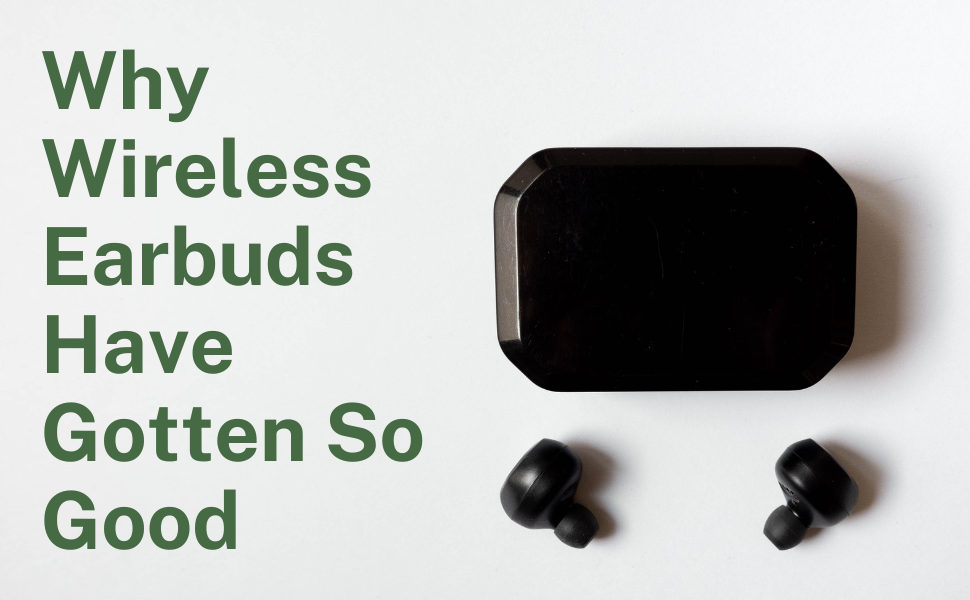
Wireless earbuds spent their first few years as a product category defined more by what they could not do than by what they could. The audio quality lagged behind wired alternatives. The battery life required constant management. The connection stability was unreliable enough that a dropped signal during a commute or a workout was an expected occurrence rather than an unusual one. Early adopters accepted these limitations because the convenience of cord-free audio was genuinely compelling even in its imperfect initial form. What has happened since is one of the more impressive product category evolutions in recent consumer technology — a convergence of wireless protocol improvements, miniaturized audio engineering, computational processing, and competitive market pressure that has produced a category where the best available options are not just acceptable compromises for people who dislike cables but genuinely superior audio experiences for a growing range of use cases. Choosing the right pair from a market that now includes hundreds of options across a wide price range is the more interesting challenge.
What Has Actually Driven the Quality Improvement
The improvement in wireless earbud quality over the past several years is not the result of any single breakthrough but of compounding advances across the multiple dimensions that determine the listening experience. Bluetooth codec development has been among the most significant drivers. Early wireless audio transmission compressed audio in ways that introduced artifacts and latency that audiophiles correctly identified as inferior to wired alternatives. The development and adoption of higher-quality codecs — aptX, aptX HD, aptX Lossless, LDAC, and Apple’s AAC implementation — has reduced the gap between wireless and wired audio transmission to the point where most listeners cannot reliably identify the difference in blind listening tests, and the gap continues to narrow with each generation of wireless audio specification.
Active noise cancellation technology has undergone an equally dramatic improvement. Early ANC implementations required significant processing power that generated heat and consumed battery life, produced inconsistent cancellation performance across different noise environments, and sometimes introduced artifacts into the audio that made the silence they created less comfortable than the noise they replaced. Current generation ANC in leading earbuds uses multiple microphones, adaptive algorithms that adjust cancellation in real time based on the acoustic environment, and processing efficiency that allows sustained ANC use without the battery penalty that characterized earlier implementations. The difference between flagship ANC in 2019 and flagship ANC now is substantial enough that someone who dismissed the technology based on early experience would find the current implementations genuinely transformative.
The Features That Actually Matter for Most Listeners
The marketing around wireless earbuds has expanded to include a list of features and specifications that grows with each product generation, and not all of them deliver value proportionate to the prominence they receive in product descriptions. Understanding which features translate into meaningful real-world improvement and which are primarily specification points helps focus the purchasing decision on what will actually affect daily use.
Sound quality fundamentals — driver size and type, frequency response, and the tuning signature the manufacturer has applied — matter in ways that are immediately and consistently perceptible to any listener regardless of their audiophile credentials. The difference between earbuds tuned for bass-heavy consumer preferences and those tuned for a more balanced, accurate reproduction is a difference that shapes every listening session, and it is worth understanding which signature you actually prefer before purchasing. Active noise cancellation quality matters enormously for anyone who uses earbuds in commuting, open office, or travel environments — the gap between adequate and excellent ANC is more experientially significant than the gap between adequate and excellent sound quality for many listeners.
Call quality — microphone performance in real-world conditions rather than controlled environments — is consistently underweighted in purchasing decisions and consistently regretted when it falls short. The bone conduction microphones, wind noise suppression algorithms, and multi-microphone arrays that leading earbuds use to isolate voice from ambient noise produce dramatically different call experiences, and the importance of this feature scales directly with how frequently the earbuds are used for calls rather than pure audio consumption.
How to Match the Right Pair to Your Actual Use Case
The most common earbud purchasing mistake is optimizing for the use case that sounds most impressive rather than the one that describes actual daily use. A listener who primarily uses earbuds for music during a daily commute on public transit has different optimal feature priorities than one whose primary use is calls during a work-from-home day, long-haul travel, or intense daily workouts. Matching the technical strengths of specific earbuds to the actual use case produces a more satisfying result than selecting based on brand prestige or benchmark performance in scenarios that do not describe regular use.
For commuters and frequent travelers, ANC quality is the primary differentiating feature and justifies the premium that the best implementations command. Sony’s WF-1000XM5 and Apple’s AirPods Pro have consistently set the ANC performance benchmark in the true wireless category, with Bose’s QuietComfort Earbuds offering competitive performance for listeners who prioritize noise cancellation above all else. For fitness and workout use, fit security, water resistance rating, and the audio profile during physical exertion matter more than ANC performance that most exercisers prefer to keep off during outdoor activity. Jabra’s Sport-focused lineup and Beats’ fitness-oriented models have addressed this use case with design choices — ear fins, secure-fit tips, and durable materials — that prioritize the stability that intensive movement demands.
For listeners who prioritize audio quality above the other feature categories, the earbud market has matured to include options that genuine audiophiles find credible — Sony’s LDAC-capable earbuds, Sennheiser’s Momentum True Wireless series, and several others that have narrowed the gap with wired alternatives to a degree that was not achievable in the wireless category even three years ago. The budget category has also improved dramatically, with options in the under one hundred dollar range from manufacturers including Anker’s Soundcore line and Nothing’s earbud lineup delivering performance that would have required a significantly higher price point in earlier product generations.
Conclusion
Wireless earbuds have reached a level of quality across sound performance, ANC, battery life, and call clarity that makes the best available options genuinely excellent rather than acceptable compromises — and the competitive pressure of a mature market has distributed meaningful quality improvement across price points that make the category accessible at almost every budget. The purchasing decision that produces the most satisfaction is the one that begins with an honest assessment of primary use case rather than a specification comparison, identifies the features that will be used in daily practice rather than those that benchmark impressively, and matches the strengths of specific products to the actual listening life they will be part of. The right pair of wireless earbuds is not the most expensive pair available — it is the pair that fits your ears, your use case, and your budget with the least compromise.