For decades, traditional education followed a familiar path: standardized curriculums, fixed classrooms, long academic timelines, and a one-size-fits-all approach to learning. While this system once met the needs of industrial-era societies, many now feel it struggles to keep pace with modern demands. Rising costs, outdated teaching methods, and limited flexibility have led people to question whether traditional education still serves learners effectively.
At the same time, new learning models are emerging—reshaping how knowledge is acquired and applied.
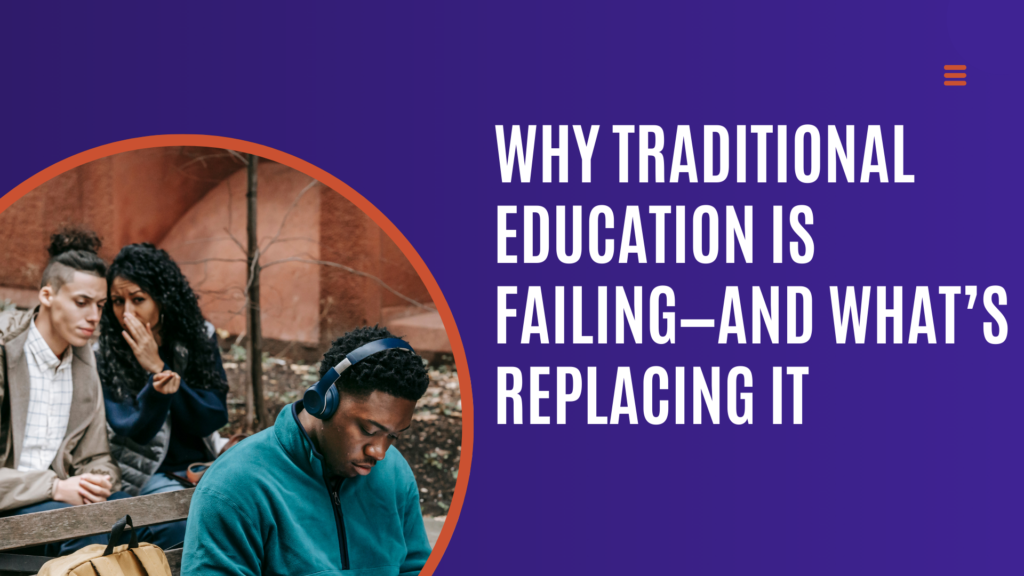
Where Traditional Education Falls Short
One major challenge with traditional education is its rigid structure. Students often move through standardized programs regardless of individual learning speed, interests, or career goals. This can result in disengagement, wasted time, and skills that don’t align with real-world needs.
Additionally, curricula are often slow to adapt. Industries evolve rapidly, yet academic programs may take years to update. As a result, graduates sometimes leave school with theoretical knowledge but limited practical application. This gap between education and employability has become increasingly noticeable.
Rising Costs and Accessibility Barriers
Another significant issue is affordability. Tuition fees, learning materials, and living expenses make traditional education inaccessible for many. The financial burden can follow students long after graduation, limiting freedom and delaying life milestones.
Accessibility goes beyond cost. Geographic location, scheduling constraints, and personal responsibilities often prevent people from attending full-time programs. These barriers exclude capable learners who need more flexible options.
Changing Skill Demands in the Modern World
Today’s economy values adaptability, continuous learning, and problem-solving. Employers increasingly prioritize skills over credentials, especially in fields driven by technology and innovation. This shift has exposed limitations in traditional education systems that emphasize degrees rather than ongoing skill development.
Learning is no longer a single phase of life—it’s a continuous process. Static education models struggle to support this reality, pushing learners to seek alternatives that evolve alongside their careers.
What’s Replacing Traditional Education
New learning models focus on flexibility, relevance, and accessibility. Online learning platforms, modular courses, and skill-based programs allow learners to choose what they study, when they study, and how deeply they engage.
These alternatives emphasize practical outcomes. Instead of broad academic coverage, learners gain targeted skills they can apply immediately. Many programs also update content regularly, keeping pace with industry changes.
Blended Learning and Personalized Education
Rather than fully replacing traditional education, many new models complement it. Blended learning combines structured instruction with flexible, self-paced study. Personalized education adapts content based on individual progress, learning style, and goals.
This shift puts learners at the center of the experience. Education becomes more responsive, efficient, and aligned with real-world needs rather than fixed academic timelines.
Redefining Success in Education
Success is no longer measured solely by degrees or certifications. Practical skills, adaptability, and lifelong learning habits now define educational value. Learners are choosing paths that offer control, affordability, and relevance.
Traditional education still holds value in many areas, but it is no longer the only—or always the best—option. The future of education is diverse, flexible, and learner-driven.
Conclusion
Traditional education is struggling not because learning has lost importance, but because the world has changed faster than the system designed to teach it. As new models emerge, learners gain more control over how, when, and why they learn. The future of education lies in adaptability, relevance, and continuous growth—meeting learners where they are, not where systems expect them to be.