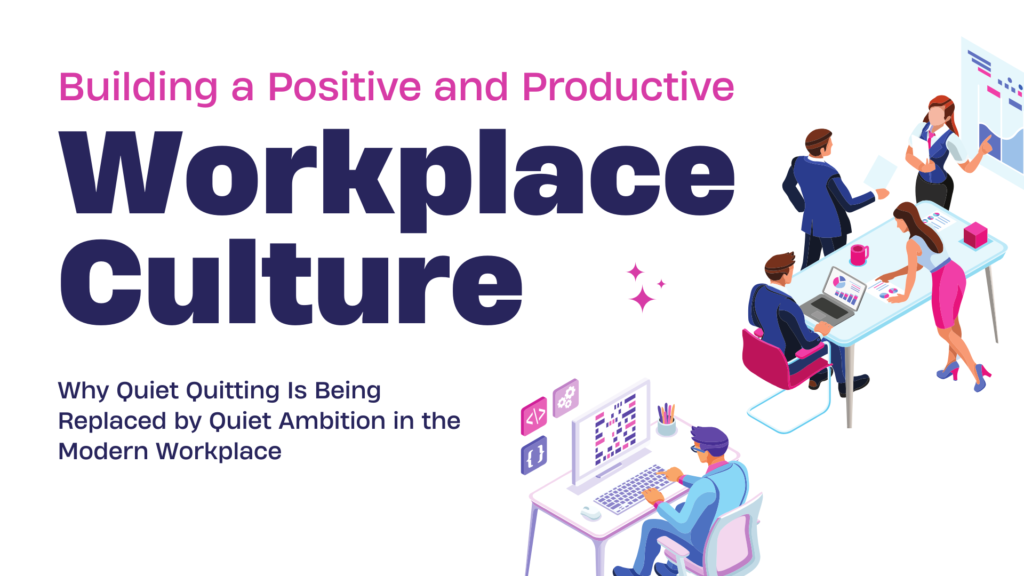
Quiet quitting had its moment. The idea that employees could mentally check out while remaining physically present resonated widely because it named something real — a workforce that had grown exhausted, undervalued, and skeptical of the unwritten contract that said extra effort would be rewarded. For a period, doing the bare minimum felt like a reasonable act of self-preservation in workplaces that had taken engagement for granted. But something has shifted. The conversation inside offices, remote setups, and professional communities has moved on, and the direction it has moved in is more interesting and more consequential than the trend it is replacing. Quiet ambition is emerging as the defining professional posture of the current moment — and understanding what it actually means explains a great deal about where the modern workplace is heading.
What Quiet Ambition Actually Looks Like
Quiet ambition is not loud self-promotion dressed in modest clothing. It is a deliberate, strategic approach to career development that prioritizes substance over visibility, long-term positioning over short-term recognition, and personal growth metrics over the approval of any single employer. The quietly ambitious professional is not disengaged — they are deeply engaged, but on their own terms and in service of their own defined trajectory rather than an employer’s agenda.
In practical terms, this looks like an employee who consistently delivers strong work without performing enthusiasm they do not feel, who invests in skills and credentials outside of work hours without broadcasting it, who builds a professional network with genuine intention rather than transactional urgency, and who evaluates every role and opportunity against a personal roadmap rather than reacting to whatever is immediately in front of them. The ambition is real and active. The quiet part is a choice — a rejection of the performative hustle culture that burned so many people out and produced so little of the promised reward.
Why the Workplace Conditions Made This Shift Inevitable
The transition from quiet quitting to quiet ambition did not happen in a vacuum. Several converging workplace realities created the conditions for it. The widespread adoption of remote and hybrid work fundamentally changed the visibility dynamics that once rewarded presence and performance theater over actual output. When the office stopped being the primary stage for professional impression management, the incentive to perform engagement shifted — and workers who had spent years playing to the room found themselves in an environment that cared more about what they produced than how visibly busy they appeared.
Simultaneously, a job market that swung from extreme candidate leverage to greater employer control pushed workers toward a more strategic relationship with career development. The era of job-hopping for rapid salary gains cooled as hiring slowed across multiple industries. Workers who had built their advancement strategy around frequent moves found themselves recalibrating — investing more deliberately in skill development, reputation building, and positioning for opportunities that might be slower to arrive but more durable when they did.
What This Means for Employers Who Are Not Paying Attention
The rise of quiet ambition presents a specific challenge for organizations that relied on visible engagement as a proxy for productivity and loyalty. The quietly ambitious employee may look superficially similar to a quiet quitter from a management perspective that measures presence and enthusiasm rather than output and growth. Both groups show up, do their work, and do not volunteer for every initiative. The difference is in what they are doing when no one is watching — and in where they intend to be in three years.
Organizations that fail to create genuine development pathways, meaningful advancement opportunities, and a culture where ambitious people can grow without performing will find that their best quietly ambitious employees are using the stability of their current role as a launchpad rather than a destination. By the time the ambition becomes visible, it will be in the form of a resignation letter and a role somewhere that noticed sooner.
How Professionals Can Channel Quiet Ambition Effectively
For individuals navigating this shift, quiet ambition is most effective when it is paired with clarity and intentionality. The quiet part works in your favor when you are genuinely building something — a skill set, a portfolio, a reputation in a specific domain — that will compound over time. It becomes a liability if the quietness slides into invisibility that prevents decision-makers from knowing what you are capable of when opportunities arise.
Strategic visibility — contributing meaningfully in high-impact moments, building genuine relationships with people who can advocate for your work, and making your ambitions known to the right people without broadcasting them to everyone — is what separates quiet ambition from quiet stagnation. The goal is not to be unseen. It is to be seen for the right things by the right people at the right time.
Conclusion
Quiet quitting reflected exhaustion with a workplace contract that had stopped delivering on its promises. Quiet ambition reflects something more mature — a recalibration toward self-directed growth, deliberate positioning, and a longer view of what a career is actually for. It is a workforce that has not given up on ambition but has become considerably more selective about who and what they extend it toward. For employers and professionals alike, understanding this shift is not optional. It is the context in which every hiring decision, retention strategy, and career move is now being made.