
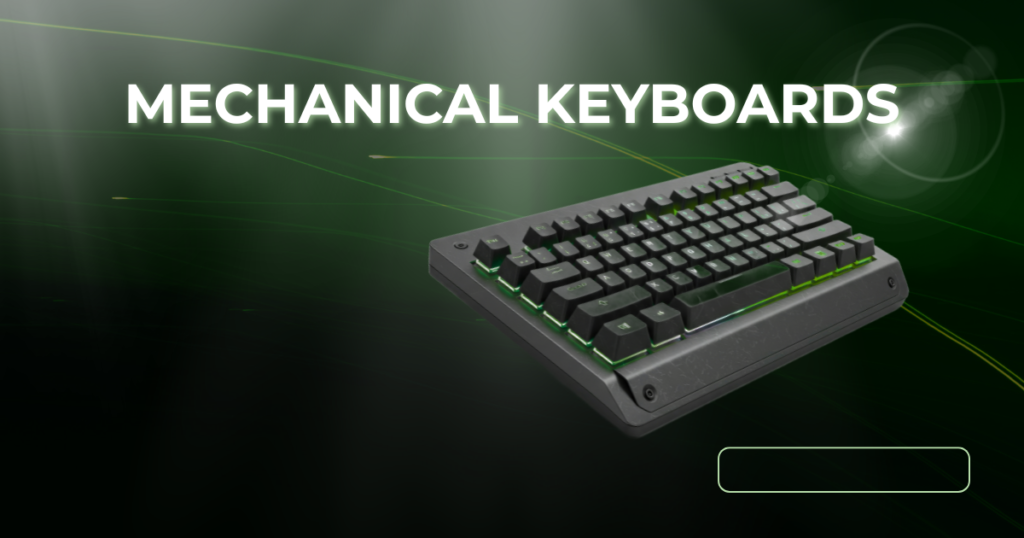
Most people who type for a living have never seriously considered their keyboard as a variable worth optimizing. It came with the computer, or it was the cheapest available option at the electronics store, and it has been faithfully translating keystrokes into words ever since without demanding any particular attention. That indifference makes a certain kind of sense — a keyboard is not a glamorous purchase, and the idea that the mechanism beneath your fingers could meaningfully affect your work feels like the kind of claim enthusiasts make to justify expensive hobbies. But the case for mechanical keyboards, examined honestly, is not primarily about enthusiasm or aesthetics. It is about the physical and cognitive experience of spending six to eight hours a day pressing keys, and what happens to that experience when the hardware is actually designed for it.
What Makes a Mechanical Keyboard Fundamentally Different
The distinction between a mechanical keyboard and the membrane or scissor-switch keyboards that ship with most computers is not superficial. Standard membrane keyboards use a rubber dome beneath each key that collapses under pressure to register a keystroke. The feedback this provides is soft, indistinct, and offers no clear signal about when the keystroke has actually registered versus how far the key still needs to travel to actuate. The result is that most typists on membrane keyboards bottom out every keystroke — pressing all the way to the base — without realizing that the key registered well before that point.
Mechanical keyboards use individual switches beneath each key — precision-engineered mechanisms that provide a distinct actuation point where the keystroke registers, a tactile or audible signal that confirms registration, and a consistent, repeatable travel distance and force requirement across every key on the board. This physical feedback loop changes the typing experience in ways that are immediately perceptible and accumulate in significance across hours of sustained use. Typing becomes more deliberate, more efficient, and for most people, noticeably more accurate once the muscle memory adapts to the clearer feedback the switch provides.
The Ergonomic Case That Goes Beyond Preference
The ergonomic argument for mechanical keyboards is where the discussion moves from preference into territory with genuine occupational health relevance. Repetitive strain injuries affecting the hands, wrists, and forearms are among the most common occupational health issues for people whose work is primarily keyboard-based. The mechanisms that contribute to those injuries include excessive force application, repetitive impact from bottoming out keystrokes, and the sustained muscle tension that comes from typing on surfaces that provide inadequate feedback about actuation.
Mechanical switches, particularly lighter linear or tactile options that actuate before the bottom of the travel distance, allow typists to reduce the force applied per keystroke and eliminate the impact of bottoming out consistently — both of which reduce the cumulative physical load that hours of typing places on the hands and wrists. The benefit is not hypothetical for people who have experienced early symptoms of repetitive strain — reduced hand fatigue at the end of a long typing day is one of the most commonly reported improvements from typists who switch from membrane to mechanical hardware and one of the more practically significant changes in a category where the differences are otherwise easy to dismiss as subjective.
Durability That Changes the Long-Term Cost Calculation
The upfront cost of a quality mechanical keyboard is meaningfully higher than a standard membrane alternative, and that price difference is the most common reason people do not make the switch despite acknowledging the benefits. The durability calculus that justifies the investment begins with the rated lifespan of the switches themselves. Mechanical switches from reputable manufacturers are typically rated for 50 to 100 million keystrokes per switch — a number that translates to a decade or more of heavy daily use before any meaningful degradation in performance would be expected.
Membrane keyboards degrade considerably faster, with the rubber domes losing their responsiveness and consistency over a much shorter cycle of use. The result is that a typist who replaces membrane keyboards every two to three years — which is common for heavy users who notice the degradation in feel — will spend more over a decade than the cost of a single quality mechanical keyboard that performs consistently across the same period. The math changes further when keyboard components are considered separately: mechanical keyboards allow individual switch replacement and keycap customization that extend the functional life of the board indefinitely in ways that membrane keyboards cannot accommodate.
Choosing the Right Switch for Your Specific Situation
The mechanical keyboard category is not monolithic, and the switch type that makes the most sense depends on the environment you work in and the tactile feedback you find most conducive to sustained focus. Switches divide broadly into three categories — linear, tactile, and clicky — each with a distinct feel and sound profile.
Linear switches actuate smoothly with no tactile bump or audible click, making them the quietest option and a practical choice for shared office environments or anyone whose household is sensitive to keyboard noise. Tactile switches provide a noticeable bump at the actuation point without the audible click, giving clear physical feedback that the keystroke has registered without the sound that makes clicky switches incompatible with most professional environments. Clicky switches offer both the tactile bump and an audible click — the most satisfying feedback profile for many typists but the least appropriate for any setting where the sound would affect others around you. Starting with a switch tester — a small sampler board that lets you feel different switch types before committing — eliminates the guesswork and prevents the most common purchase regret in the mechanical keyboard category.
Conclusion
The mechanical keyboard upgrade is not a purchase for enthusiasts chasing a hobby — it is a practical investment for anyone whose livelihood involves extended daily typing. The physical feedback difference changes how typing feels across a full workday. The ergonomic benefits of reduced force and eliminated bottoming-out impact accumulate meaningfully over years of use. The durability reframes the price premium as a long-term cost reduction rather than an indulgence. And the switch variety available ensures that the upgrade can be tailored to your specific environment and preference rather than requiring any compromise in return for the improvement. For the category of person who types for a living, the keyboard is a professional tool — and professional tools are worth optimizing.