
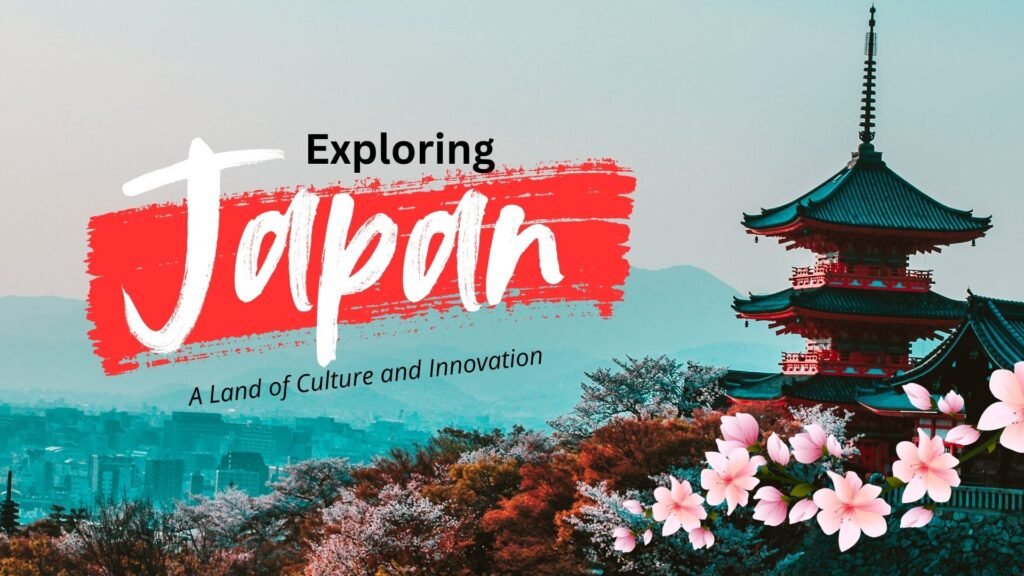
Every traveler who has been to Japan seems to return with the same observation: nothing quite prepares you for the reality of it. Not the research, not the photographs, not the accounts of people who went before you. Japan occupies a category of travel experience that is genuinely difficult to convey in advance because so much of what makes it extraordinary operates at the level of daily texture — the precision of the train system, the quality of food available at every price point, the particular kind of respect embedded in how strangers interact with one another and with visitors. For a first-time long-haul traveler stepping outside familiar territory for the first time, Japan offers something rare: a destination that is deeply foreign in culture and utterly reliable in logistics, and that combination makes it the ideal introduction to the world beyond borders most people know.
Why Japan Works So Well for First-Time Long-Haul Travelers
The anxiety that accompanies a first long-haul trip is usually concentrated around logistics — will I be able to navigate an unfamiliar transit system, communicate without shared language, find food I can trust, stay safe in an environment I do not know. Japan addresses each of these concerns with a thoroughness that few destinations anywhere in the world can match. The public transportation network is among the most extensive, punctual, and clearly signposted in existence. Major train stations display information in English alongside Japanese, IC cards like Suica and Pasmo work across subway, train, and bus systems throughout the country and can be loaded and managed with minimal language requirement.
Safety is another dimension where Japan stands apart. It consistently ranks among the safest countries in the world by virtually every measure, and the cultural norms around public behavior create an environment where solo travelers, first-time visitors, and people navigating unfamiliar situations encounter helpfulness rather than predation. The combination of logistical reliability and personal safety removes the two largest sources of first-long-haul anxiety and allows the experience to be about discovery rather than management — which is exactly what a first major international trip should feel like.
The Experiences That Make Japan Irreplaceable on Any Travel List
Japan’s appeal operates on multiple registers simultaneously, which is part of why it works for such a wide range of travelers. The historical and cultural depth available in Kyoto alone — temples, shrines, traditional wooden districts, tea ceremony culture, and seasonal natural beauty across cherry blossom and autumn foliage periods — would justify a long-haul trip to many destinations. Tokyo offers the opposite experience in the same country: one of the world’s great modern cities, dense with neighborhoods that each carry a distinct character, a food scene that has no peer at any budget level, and an energy that is urban in a way that feels distinctly and irreducibly Japanese rather than generically metropolitan.
Beyond the two major urban anchors, Japan rewards travelers willing to move between regions. Osaka delivers a street food culture and social atmosphere noticeably different from Kyoto’s refinement. Hiroshima carries a historical weight that no visitor leaves unchanged by. The Japanese Alps offer landscapes and traditional inn experiences that feel remote from urban Japan in the best possible way. The country’s rail network — particularly the shinkansen bullet train system — makes moving between these regions fast, comfortable, and genuinely part of the experience rather than a logistical inconvenience to be minimized.
How to Plan a First Japan Trip Without Overwhelming Yourself
The most common planning mistake for a first Japan trip is attempting to see too much of the country in too little time. Japan rewards depth over breadth in a way that rewards slowing down and spending more time in fewer places rather than assembling a checklist itinerary that turns the trip into a transit exercise. A two-week first trip is best organized around two to three base locations rather than seven or eight stops — enough variety to experience the range of what the country offers without the logistical exhaustion of constant movement.
Tokyo deserves a minimum of four to five days on a first visit — long enough to explore neighborhoods beyond the most obvious tourist circuits and to begin developing the rhythm of daily life in the city. Kyoto warrants similar time, given the density of significant sites within reach and the value of experiencing it across different times of day rather than rushing through the highlights in a single long day. The journey between them via shinkansen is itself a travel experience worth savoring rather than treating as a transfer, with views of Mount Fuji on a clear day that justify the window seat alone.
Accommodation choices shape the experience significantly and deserve more planning attention than they receive in most first-trip guides. Traditional ryokan inns — particularly for one or two nights outside the major cities — offer a genuine immersion in Japanese hospitality, food, and spatial aesthetics that a hotel stay cannot approximate. Booking at least one ryokan experience into the itinerary, ideally in a location like Hakone or the Arashiyama district, adds a dimension to the trip that most first-time Japan visitors identify afterward as among its most memorable components.
Practical Preparation That Makes the Experience Smoother
A pocket Wi-Fi device or local SIM card activated before leaving the airport is the single most useful practical preparation for navigating Japan independently. The ability to use Google Maps with real-time transit directions transforms the task of navigating a complex transit system from intimidating to intuitive. IC transit cards loaded with sufficient funds for the first few days eliminate cash handling for most transit interactions. Carrying cash beyond that is genuinely important — Japan remains more cash-dependent than most developed countries, and many smaller restaurants, shrines, and local businesses operate on a cash-only basis that surprises visitors accustomed to card acceptance everywhere.
Learning a handful of Japanese phrases — greetings, expressions of gratitude, basic numbers — is not required for navigation but produces a quality of interaction with locals that repays the minimal effort required many times over. Japan’s service culture is extraordinarily attentive to guests, and the small gesture of attempting communication in the local language tends to be received with a warmth that elevates even brief transactional encounters into something more genuinely human.
Conclusion
Japan earns its place at the top of first-time long-haul travel lists not because it is the easiest destination or the most familiar, but because it balances the extraordinary with the navigable in a way that makes the unfamiliar feel accessible rather than overwhelming. The logistics work, the safety is reliable, the experiences are genuinely world-class across culture, history, food, and landscape, and the country reveals more the longer and more attentively you engage with it. A first long-haul trip is the one that determines whether international travel becomes a recurring part of your life — and Japan is among the best possible arguments for making it so.