Flooring decisions carry a weight in home improvement that most other interior choices do not, and the reason is straightforward: floors cover every square foot of every room, they define the visual foundation of the entire living space, and they last long enough — or fail to — that the decision made today shapes the experience of the home for decades. In a market where luxury vinyl plank, laminate, and engineered alternatives have improved dramatically and positioned themselves as practical substitutes for real wood at lower price points, the case for genuine hardwood flooring deserves a more considered examination than the simple comparison of upfront costs allows. That case remains compelling, but it is more nuanced than either the flooring industry’s marketing or the cost-comparison calculators that dominate online research tend to suggest.
What Hardwood Offers That Alternatives Cannot Replicate
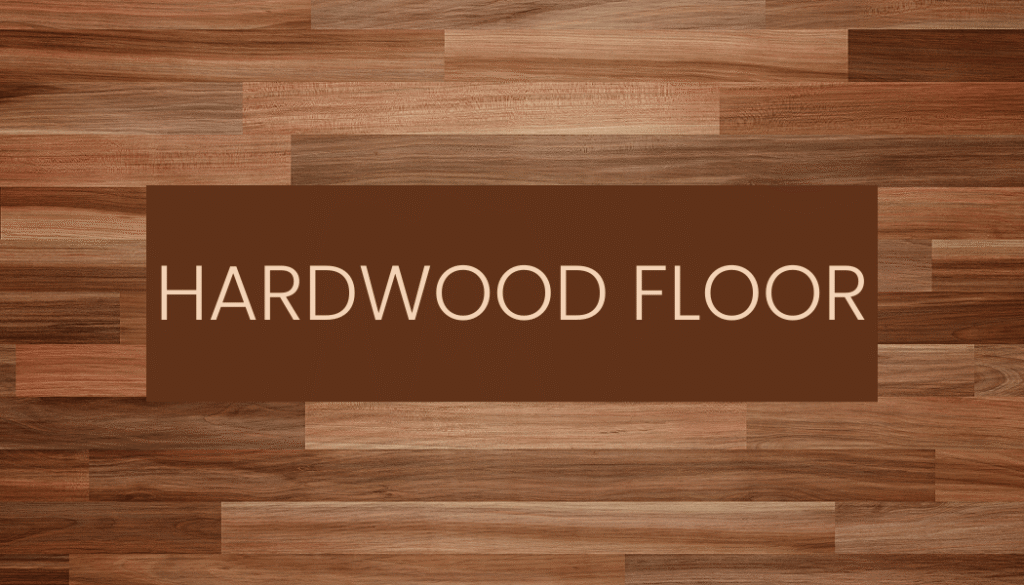
The argument for hardwood flooring begins with a characteristic that no manufactured alternative has successfully replicated despite genuine advances in printing technology and surface treatment: the material reality of solid wood. Luxury vinyl and laminate products have become impressively convincing visual simulacra of wood grain, but the experience of walking on real wood — its acoustic properties, its response to weight and temperature, the way it ages into a patina that accumulates character rather than degrading uniformly — is produced by the material itself rather than its surface appearance, and that experience is not available from products that reproduce only the visual dimension.
The refinishing capability of solid hardwood is the most practically significant advantage it holds over its alternatives. A solid hardwood floor that has accumulated scratches, dents, surface staining, and the general wear of decades of use can be sanded back to bare wood and refinished to a condition that is indistinguishable from new installation — multiple times across the floor’s lifespan, depending on the wood species and original plank thickness. A luxury vinyl or laminate floor that reaches the same condition has reached the end of its functional life and requires full replacement. This distinction transforms the total cost calculation significantly over a long ownership horizon: the hardwood floor that requires refinishing every ten to fifteen years at a fraction of replacement cost competes favorably against the alternative floor that requires full replacement at the same interval, particularly when the hardwood’s contribution to resale value is factored into the comparison.
The Species Decision That Determines Long-Term Performance
The wood species selected for a hardwood floor installation determines the floor’s durability, its visual character, and the appropriate applications it can sustain — and it is the decision point where the most consequential errors in hardwood floor selection occur. The Janka hardness scale — a standardized measurement of the force required to embed a steel ball to half its diameter into a wood surface — provides the most reliable comparative metric for evaluating how different species will perform under the specific traffic and use conditions of the installation location.
Oak, in both red and white varieties, occupies the sweet spot of the hardness scale for residential application — hard enough to resist the everyday wear of high-traffic areas without being so hard that it becomes brittle or difficult to work with during installation. It is the most widely available domestic hardwood species, which keeps its cost competitive relative to its performance characteristics, and its grain pattern is neutral enough to work across a wide range of interior design directions. Hickory and hard maple sit higher on the hardness scale and are appropriate for installations where exceptional durability is the primary requirement — though hickory’s pronounced grain variation and maple’s tendency to show scratches in the light-colored varieties it is most often sold in are aesthetic trade-offs that the hardness advantage should be weighed against. Softer domestic species — pine, cherry, and walnut — offer distinctive aesthetic qualities that harder species cannot match, but their application is better suited to lower-traffic areas and households without pets whose claws represent a consistent mechanical assault on soft wood surfaces.
Solid Versus Engineered Hardwood and When Each Makes Sense
The distinction between solid hardwood and engineered hardwood is one of the more consequential and more frequently misunderstood decisions in flooring selection. Solid hardwood is precisely what the name describes — a plank of wood milled from a single piece of lumber, typically three-quarters of an inch thick, that can be sanded and refinished multiple times across its lifespan. Engineered hardwood is a layered product with a real wood veneer — typically two to six millimeters thick — bonded to a core of plywood or high-density fiberboard that provides dimensional stability across humidity and temperature changes.
The dimensional stability advantage of engineered hardwood is real and significant in specific installation contexts. Solid hardwood expands and contracts with changes in ambient humidity — a characteristic that makes it inappropriate for installation below grade in basements, problematic over radiant heat systems that create the dry conditions that cause excessive contraction, and challenging in climates with extreme seasonal humidity variation without careful humidity management. Engineered hardwood handles these conditions more reliably because its cross-ply core construction resists the dimensional movement that solid wood undergoes. The trade-off is refinishing capacity — the veneer layer on engineered hardwood limits the number of sanding cycles it can sustain before the veneer is exhausted, with thicker veneer products offering two to three refinishes and thinner ones offering one or none. For installations above grade in climate-controlled environments without radiant heat, solid hardwood’s superior refinishing longevity makes it the better long-term investment. For the specific conditions where dimensional stability is a genuine concern, engineered hardwood provides the performance characteristics that solid hardwood cannot.
Finish, Width, and Installation Decisions That Affect the Final Result
The finish applied to hardwood floors determines both their visual character and their maintenance requirements in ways that the wood species selection alone does not. Factory-applied polyurethane finishes — the standard on most pre-finished hardwood products — offer durability and consistency that site-applied finishes historically struggled to match, and the reduced installation time and immediate usability of pre-finished products have made them the dominant choice in residential installation. Oil-based finishes and hardwax oil products have attracted renewed interest for their ability to be spot-repaired — a scratched section can be treated without refinishing the entire floor — and for the more natural, lower-sheen appearance they produce that many homeowners prefer to the plastic quality that high-gloss polyurethane can impart.
Plank width has shifted significantly in design preference over the past decade, with wider planks — five inches and above — having largely displaced the narrow strip flooring that defined hardwood floors in earlier residential construction. Wider planks showcase the grain character of the wood more dramatically, reduce the visual busyness of more joints per square foot, and have become the default expectation in contemporary residential design. The trade-off is that wider planks are more susceptible to cupping and gapping with humidity changes than narrower strips — a consideration that reinforces the importance of proper acclimation before installation and adequate humidity management after.
Conclusion
Hardwood floors remain worth their investment premium for homeowners who approach the decision with accurate information about species selection, the solid versus engineered distinction, and the finish and installation variables that determine long-term performance. The alternatives have improved and serve specific situations well — but the refinishing longevity, the resale value contribution, and the material quality that genuine hardwood provides over a long ownership horizon represent a value proposition that the alternatives have not displaced, despite genuine improvements in how closely they approximate its appearance. The investment is real. So is the return, for the homeowner who makes the selection decisions that allow the floor to perform as the investment it is.