
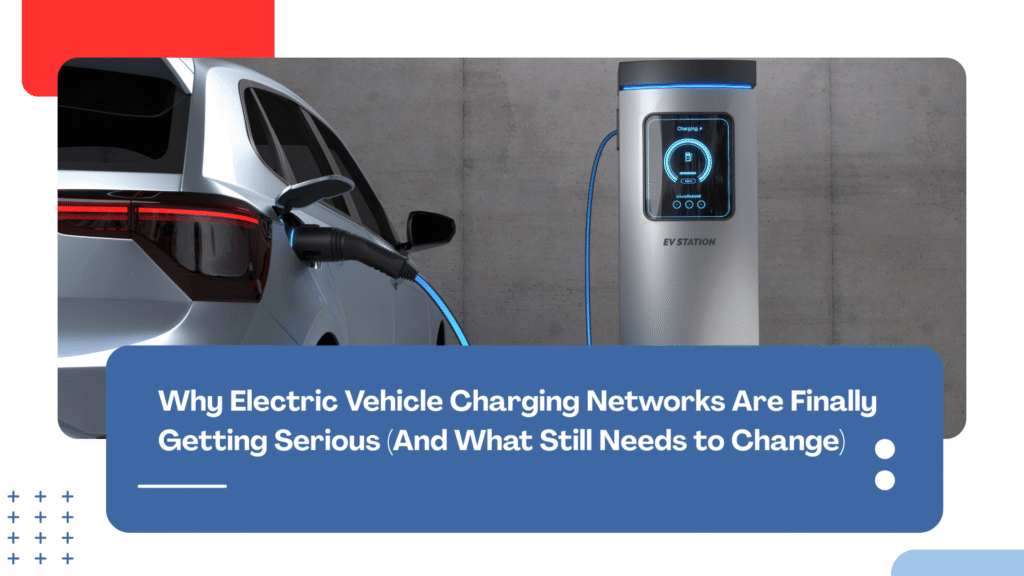
The charging infrastructure problem has been the most persistent and most legitimate objection to electric vehicle adoption since the technology entered the consumer mainstream. The vehicles themselves have improved dramatically — ranges have extended, prices have come down, performance has exceeded gasoline equivalents across multiple segments — but the experience of charging away from home has remained the friction point that potential buyers cite most consistently when explaining their hesitation. That friction was not imaginary. The early public charging landscape was characterized by unreliable equipment, incompatible networks requiring multiple accounts and payment methods, slow charging speeds that made highway travel genuinely inconvenient, and a geographic coverage that left meaningful portions of the country without viable fast charging access. The landscape has changed substantially, and the change has accelerated enough in recent years that the charging network objection — while still legitimate in specific respects — requires a significant update to remain accurate.
What Has Actually Improved in the Charging Landscape
The most consequential development in public charging infrastructure over the past several years has been the combination of Tesla opening its Supercharger network to non-Tesla vehicles and the industry-wide adoption of the North American Charging Standard connector that Tesla’s network uses. For most of the electric vehicle era, the fragmentation between Tesla’s proprietary connector and the Combined Charging System used by other manufacturers meant that the best charging network in the country — Tesla’s Supercharger system, which had established a deserved reputation for reliability and coverage that competitors could not match — was unavailable to the majority of electric vehicle drivers. The opening of that network, combined with adapter availability and the transition of major manufacturers to NACS connectors as standard equipment, has effectively unified the two largest charging standards in North America in a way that removes the compatibility friction that previously forced non-Tesla drivers to navigate an inferior patchwork of alternatives.
The federal infrastructure investment that allocated substantial funding specifically to electric vehicle charging deployment has begun translating into physical installations at a pace that was not achievable through private investment alone. The geographic coverage gaps that made highway travel in large portions of the country genuinely impractical for electric vehicle drivers are being addressed through corridor-focused deployment that prioritizes the routes where charging absence was most consequential for long-distance travel. Charging speed has improved in parallel — the 150 to 350 kilowatt charging speeds available at current generation fast chargers deliver meaningful range in time windows that highway stops naturally accommodate, narrowing the gap between charging and refueling in the travel experience that matters most for range anxiety.
The Reliability Problem That Infrastructure Investment Cannot Fully Solve
The quantity of charging infrastructure has grown substantially, but the quality and reliability of that infrastructure — particularly outside Tesla’s network — has not improved at the same pace. Studies examining the operational status of public fast chargers at any given time have consistently found failure rates that would be commercially unacceptable in any analogous service industry. A charging station that is non-functional, displaying an error, occupied by a vehicle that has completed charging and not been moved, or unable to initiate a session due to payment system failures is not a charging option — it is a source of anxiety for a driver who arrived at the location specifically because their vehicle needed charging.
The reliability gap between Tesla’s Supercharger network and the broader non-Tesla charging landscape reflects a difference in how the infrastructure is owned, operated, and maintained. Tesla’s vertically integrated approach — designing the hardware, building the network, operating the stations, and maintaining the equipment — creates accountability and incentive alignment that the third-party charging provider model does not automatically produce. When a Supercharger station fails, Tesla is accountable for its repair because the network’s reputation and its vehicles’ usability depend on it. When a third-party charging station fails, the accountability chain between the equipment manufacturer, the network operator, the property owner, and the maintenance provider is distributed enough to create response time delays that leave non-functional equipment in place for days or weeks while the responsible party is identified and engaged.
The Urban Charging Gap That Policy Has Not Adequately Addressed
The charging infrastructure conversation has focused disproportionately on highway corridor coverage — the long-distance travel use case that generates the most visible anxiety — while underaddressing the urban and suburban charging access problem that affects a larger share of potential electric vehicle adopters in more consequential ways. The home charging assumption that underlies most electric vehicle financial and convenience calculations — the premise that the vehicle charges overnight at home and arrives at each day fully charged — fails for the substantial portion of urban households that do not have access to dedicated parking with electrical outlet access.
Apartment residents, renters in multi-unit buildings, and homeowners whose parking situations do not accommodate home charger installation face an electric vehicle ownership model that depends entirely on public charging infrastructure for their regular charging needs rather than treating public charging as a supplement to home charging. For this population, the public charging reliability, availability, and cost structure problems are not inconveniences that affect occasional road trips — they are the daily operational reality of owning an electric vehicle. The charging infrastructure investment that has prioritized highway corridors and destination charging has not adequately addressed the density and reliability of urban neighborhood charging that would make electric vehicle ownership practical for residents without home charging access — a population that is disproportionately lower-income and that the equity arguments for electric vehicle adoption most clearly include.
What Still Needs to Change for the Transition to Reach Its Potential
The charging infrastructure improvements of recent years have addressed the most visible and most frequently cited barriers to electric vehicle adoption among drivers who have home charging access and primarily use their vehicles for daily commuting with occasional highway travel. The barriers that remain are more structural and less amenable to resolution through additional hardware deployment alone. The reliability standards that public charging infrastructure is held to need to approach the operational uptime expectations applied to other essential infrastructure — gas stations do not operate at the failure rates that public charging currently tolerates, and the expectation gap between the two is a legitimate source of driver hesitation that more charger installations do not address if those installations share the reliability profile of existing equipment.
The payment and user experience fragmentation that has improved with network consolidation but not been fully resolved still creates friction that seamless infrastructure should not impose. A charging experience that requires application downloads, account creation, or troubleshooting steps to initiate a session is an experience that the casual or first-time user will find intimidating and that the regular user will find wearing across repeated encounters. The plug-and-charge authentication standard that allows a vehicle to initiate and pay for a charging session automatically upon connection — the experience that Tesla’s Supercharger network has long delivered and that the broader network is still inconsistently implementing — represents the user experience baseline that widespread adoption requires.
Conclusion
Electric vehicle charging networks have made genuine and significant progress toward the infrastructure that mass adoption requires — the Tesla Supercharger network opening to non-Tesla vehicles, federal investment beginning to address geographic coverage gaps, and charging speeds reaching levels that make highway travel practically comparable to gasoline refueling for most drivers. The work that remains is less about quantity and more about quality — reliability standards that match the infrastructure’s essential role, urban charging access that addresses the home charging assumption’s failure for a significant portion of potential adopters, and user experience consistency that makes public charging as frictionless as the vehicles it serves have become. The network is getting serious. Serious enough for the transition it needs to support requires closing the remaining gaps with the same urgency that opened the ones already addressed.