The conversation around artificial intelligence in the workplace has gone through several distinct phases. First came the automation anxiety — the fear that machines would replace human jobs wholesale and leave entire categories of work without workers. Then came the productivity tool framing — AI as a sophisticated assistant that could help individuals work faster and better but still required a human to direct every meaningful action. Both framings captured something real about where AI was at the time they dominated the conversation. Neither captures where AI is heading with any accuracy. The shift that is now underway — from AI as a tool that responds to AI as an agent that acts — is the most consequential transition yet, and its implications for how work gets done extend considerably further than either previous wave suggested.
What Makes an AI Agent Different From Every AI Tool That Came Before
The distinction between an AI tool and an AI agent is not a matter of degree — it is a fundamental difference in how the technology operates and what it can accomplish. Every AI tool that has defined the current moment — the chatbots, the image generators, the writing assistants, the code completion systems — shares a common characteristic: they respond to a prompt and produce an output. The interaction is discrete and human-directed. You ask, it answers. You provide input, it produces output. The human remains the continuous actor connecting one AI interaction to the next.
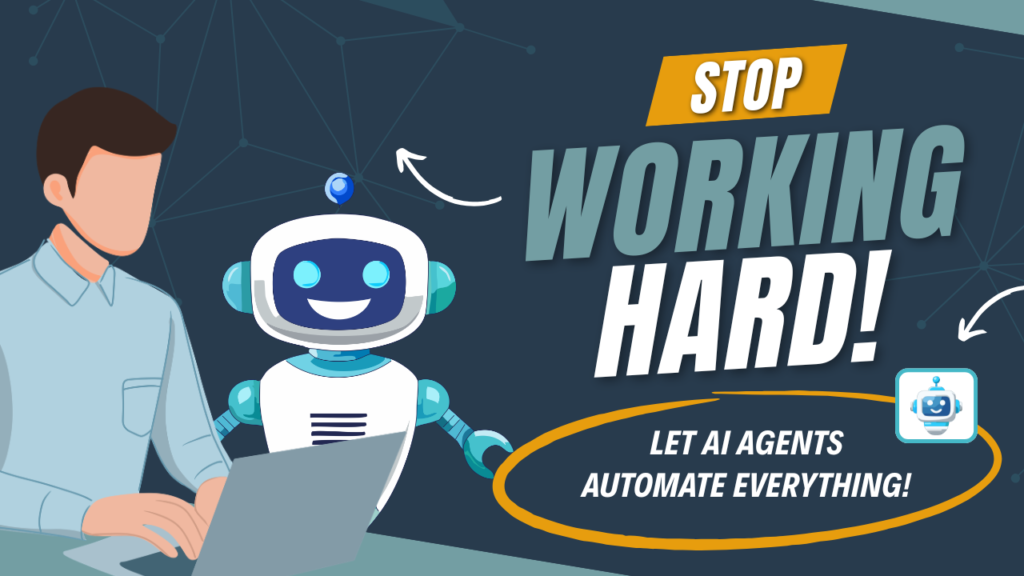
An AI agent operates differently at a foundational level. Rather than responding to a single prompt and waiting for the next one, an agent receives a goal and pursues it across multiple steps, making decisions along the way, using tools and accessing information as needed, and adapting its approach based on what it encounters in the process. The human sets the objective; the agent determines and executes the sequence of actions required to achieve it. This shift from responding to pursuing is what separates agents from the AI tools that preceded them, and it is the shift that changes the relationship between AI and work most profoundly.
What AI Agents Can Already Do in Real Work Environments
AI agents are not a theoretical future capability — they are operational in a growing number of real work environments, and the tasks they are handling are substantive rather than trivial. In software development, agent systems are being used to receive a feature specification, write the code to implement it, run tests against that code, identify failures, revise the implementation, and deliver a working result — a sequence of actions that previously required sustained human attention across each step. In research and analysis, agents can be tasked with gathering information from multiple sources, synthesizing it into structured outputs, identifying gaps, and iterating until the output meets defined criteria.
Customer service, supply chain management, financial analysis, content operations, and legal document review are among the domains where agent-based systems have moved from pilot programs into operational deployment. The common thread is not that agents are replacing the humans in these functions — it is that they are handling the sequences of structured, multi-step work within those functions that previously required human time and attention, freeing the humans involved to operate at the level of judgment, oversight, and goal-setting rather than execution.
How This Changes What Organizations Will Actually Look Like
The organizational implications of AI agents operating at scale extend beyond productivity metrics into the fundamental question of how work is structured and what human roles within that structure look like. Organizations built around the assumption that most knowledge work requires human execution of each step in a multi-step process are built around an assumption that AI agents are in the process of invalidating. The workflows, team structures, and role definitions that make sense in a world where humans must do every step of every process look different from those that make sense in a world where agents can handle the execution while humans handle the direction.
The most immediate structural implication is a significant reduction in the ratio of execution-level roles to oversight and strategy roles within organizations that adopt agent-based operations effectively. This is not a prediction that most jobs disappear — it is a prediction that the composition of what jobs require changes substantially, with a higher proportion of the value created by human workers coming from the judgment, creativity, and contextual understanding that agents cannot yet replicate, and a lower proportion coming from the execution of structured, repeatable processes that agents handle more efficiently.
What This Means for Individuals Building Careers Right Now
The professional implications of the AI agent shift are significant enough to warrant deliberate thinking for anyone building a career in the current environment. The skills that will retain and increase their value as agents become more capable are precisely the skills that agents are structurally least equipped to replicate: the ability to define meaningful goals clearly enough for an agent to pursue them, the judgment to evaluate whether an agent’s output actually achieves what the goal required, the contextual understanding to recognize when a situation falls outside the parameters an agent was designed to handle, and the human relationship capabilities that no agent interaction can substitute for in contexts where the relationship itself is part of the value.
The professionals who are most exposed to displacement by agent technology are those whose primary value contribution is the execution of structured, repeatable, multi-step processes — the work that agents are specifically designed to handle. The professionals who are most positioned to benefit are those who develop the capacity to work with agents effectively: designing the goals they pursue, evaluating the outputs they produce, and building the judgment to know when human intervention is essential rather than optional. The career investment that the agent shift most clearly rewards is not learning to do more of what agents do — it is developing deeper capability in what agents cannot.
Conclusion
AI agents represent a shift in how AI relates to work that is more fundamental than anything the previous wave of AI tools produced. The move from AI that responds to AI that acts changes the structure of work, the composition of organizational roles, and the professional skills that carry the most value in an environment where execution increasingly belongs to agents and judgment increasingly belongs to humans. The transition is already underway in the organizations moving fastest to adopt it, and its implications will reach the broader professional landscape on a timeline that is shorter than most career planning horizons. Understanding what agents are, what they can do, and what they cannot is no longer a technology interest — it is a professional necessity.