New Zealand delivers the combination of dramatic landscape variety, outdoor adventure accessibility, and cultural depth that its reputation promises — and does so at a cost that surprises most visitors who arrive expecting the budget travel value of Southeast Asia and encounter prices closer to Western Europe or Australia. The honest New Zealand travel guide for 2026 addresses the cost reality that outdated budget estimates consistently misrepresent, the seasonal dynamics that make timing more consequential here than in most destinations, and the specific experiences whose quality justifies the long-haul flight and the significant daily expenditure that New Zealand travel requires. The traveler who arrives with calibrated expectations and a well-planned itinerary finds a destination that exceeds them. The traveler who arrives expecting cheap adventure travel finds the budget reality a persistent friction that colors the entire experience.
What New Zealand Actually Costs in 2026
New Zealand is an expensive destination whose daily costs reflect the combination of a high standard of living, geographic isolation that increases import costs, and the tourism infrastructure whose quality comes at prices that the budget travel framing that the country’s outdoor adventure reputation attracts consistently underestimates. The daily budget that a realistic New Zealand trip requires varies by travel style in ways that the specific figures make more useful than the general acknowledgment of expensiveness.
Budget travelers — those staying in hostel dormitories, cooking most meals from supermarket ingredients, and using the freedom camping and Department of Conservation campsite network rather than paid accommodation — can manage NZD $80 to $120 per day, which translates to approximately USD $50 to $75 at current exchange rates. This budget requires genuine commitment to self-catering, camping, and the flexibility that free and low-cost accommodation requires — it is achievable but not comfortable in the sense that most people mean when they describe comfortable travel. The midrange traveler staying in motels, holiday parks with private cabins, and the occasional Airbnb, eating at cafes for breakfast and restaurants for dinner two to three times weekly, and joining guided activities for the experiences that self-guided access does not provide should budget NZD $250 to $400 per day — USD $155 to $250. The comfortable traveler whose accommodation is boutique lodges and quality hotels and whose activity spending includes guided multi-day hikes and scenic flights should budget NZD $500 to $800 per day and up.
Transportation costs deserve specific attention because New Zealand’s geographic configuration — two main islands separated by a ferry crossing, with distances between major destinations that make a car or campervan essentially mandatory for experiencing the country beyond the main cities — makes transportation a significant budget component whose planning affects total trip cost meaningfully. Rental cars start at NZD $50 to $70 per day for basic models, campervans at NZD $100 to $180 per day, and the Interislander or Bluebridge ferry crossing between the North and South Islands costs NZD $60 to $120 per adult plus vehicle costs depending on booking timing and crossing choice.
The North Island: Geothermal Drama and Maori Culture
The North Island’s primary distinction from the South Island is its geothermal landscape and the Maori cultural concentration that makes it the more culturally rich of the two islands for visitors whose priority extends beyond natural scenery to human history and living culture. Rotorua is the geothermal and Maori cultural center whose combination of active volcanic landscape — boiling mud pools, erupting geysers, and sulfur-scented hot springs — and the most accessible authentic Maori cultural experiences in the country makes it the North Island’s essential stop beyond Auckland.
The Tongariro Alpine Crossing — the one-day guided or self-guided trek across the volcanic terrain of Tongariro National Park whose combination of active craters, emerald lakes, and dramatic lava fields has made it New Zealand’s most walked day hike and one of the world’s most photographed single-day walks — is the North Island experience that outdoor-oriented visitors most consistently identify as their trip highlight. The crossing requires good weather for the full experience — cloud cover obscures the crater views that make it distinctive — and the shuttle booking from Whakapapa Village or National Park township that the one-way track format requires should be arranged in advance during peak season.
Wellington, the compact capital whose cafe culture, Te Papa Tongarewa national museum, and the vibrant Cuba Street precinct make it arguably New Zealand’s most livable city for urban experience, rewards a two to three day stay that most itineraries shortchange in the rush to reach the South Island. The free Te Papa museum alone warrants a full day for visitors with genuine interest in New Zealand natural history, Maori culture, and the colonial history whose legacy the museum presents with more honest complexity than most national museums manage.
The South Island: Where the Scenery Reaches Its Peak
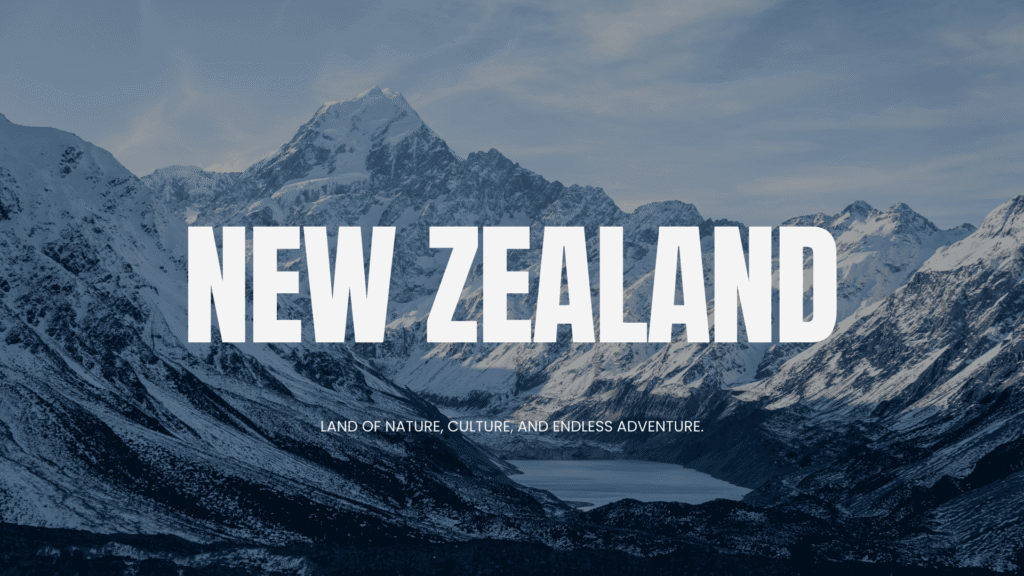
The South Island is the destination whose landscapes most directly justify the long-haul flight that New Zealand requires — the Fiordland National Park whose Milford Sound and Doubtful Sound rank among the world’s most dramatic fjord scenery, the Mount Cook National Park whose Aoraki summit presides over the Southern Alps glacier landscape, and the Queenstown adventure hub whose combination of bungee jumping, skydiving, jet boating, and the surrounding Remarkables mountain range has made it the southern hemisphere’s adventure capital.
Queenstown is simultaneously New Zealand’s most visited destination and its most expensive — accommodation prices that exceed comparable quality in Auckland, activity costs that compound quickly across the adventure menu that the destination’s culture encourages sampling, and the restaurant prices that a captive tourism audience in a scenic location supports. The traveler who bases themselves in Queenstown for a week and participates fully in its adventure activity offering should budget NZD $300 to $500 per day excluding accommodation — a figure that makes Queenstown one of the more expensive per-day destination experiences available anywhere in the world for the activity-oriented visitor.
The Milford Sound day trip or overnight cruise from Queenstown — a 4.5-hour drive through some of the most dramatic mountain scenery in New Zealand, culminating in the fjord whose sheer rock faces rise 1,200 meters from the water — is the South Island experience that most visitors identify as their most memorable single day in the country. The cruise that includes an overnight stay on the fjord, experiencing the water’s mirror-still surface at dawn before the day-trip boats arrive, produces an experience whose quality over the standard day trip justifies the additional cost for visitors whose budget accommodates it.
When to Visit and Why Timing Matters More Than in Most Destinations
New Zealand’s Southern Hemisphere seasonality — summer from December through February, winter from June through August — and its geographic exposure to weather systems from the Tasman Sea and Southern Ocean make weather more variable and more consequential for specific activities than in most destinations. The Milford Sound road is occasionally closed by avalanche risk in winter, the Tongariro Alpine Crossing is frequently impassable without specialist equipment in winter conditions, and the freedom camping that budget travel depends on is significantly less comfortable in the South Island’s winter temperatures.
The peak season of December through February brings the summer weather that outdoor activities require and the crowds and accommodation prices that popularity produces — Queenstown and Milford Sound in January are operating at their busiest, and accommodation should be booked months in advance. Shoulder season — October through November and March through April — provides the best combination of favorable weather, manageable crowds, and prices that have not reached the summer peak — and the autumn foliage that March and April produce in the South Island’s beech forests adds a visual dimension that summer visitors do not experience. Winter travel rewards visitors whose specific goals include skiing at Queenstown’s Coronet Peak and The Remarkables or Wanaka’s Treble Cone, whose fjord landscapes are dramatically moodier in winter light, and whose budget benefits from the accommodation discounts that the low season produces across most of the country.
Conclusion
New Zealand in 2026 is an expensive, spectacular destination whose landscape variety, outdoor activity access, and cultural depth justify the cost for the traveler who arrives with honest budget expectations and an itinerary that prioritizes the specific experiences that make the long-haul flight worthwhile. The North Island’s geothermal drama and Maori culture and the South Island’s fjord and alpine scenery together constitute a travel experience whose quality has no precise equivalent elsewhere — and whose price, while significant, buys access to landscapes and activities that genuinely earn the superlatives that New Zealand travel consistently generates.