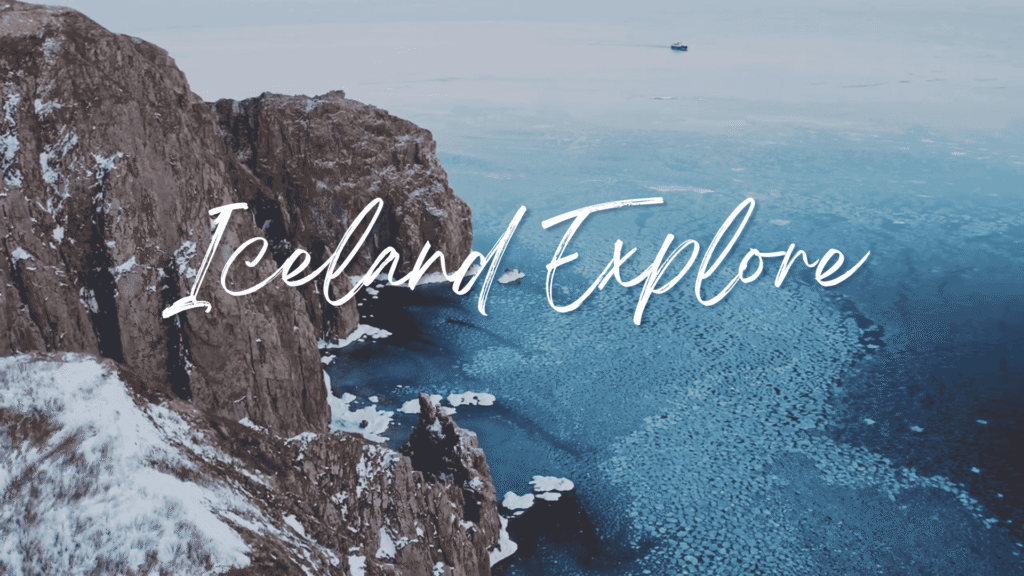
Iceland delivers the landscape experiences that its reputation has built over the past decade of tourism growth — the northern lights, geothermal hot springs, volcanic terrain, and the midnight sun whose combination of natural phenomena in a compact, drivable country has made it one of the world’s most photographed destinations. It delivers these experiences at a cost that has risen with its popularity to levels that surprise visitors who researched prices during the post-financial-crisis period when Iceland was genuinely budget-friendly, and at a seasonal variation whose implications for what is visible, drivable, and experiential are significant enough to make timing one of the most consequential planning decisions for any Iceland trip. The traveler who arrives with accurate cost expectations, an itinerary calibrated to the season, and specific knowledge of the experiences whose quality justifies Iceland’s premium price point returns having understood exactly why the destination generates the enthusiasm whose persistence has survived the tourism surge that changed its character in other respects.
What Iceland Actually Costs in 2026
Iceland is among the most expensive travel destinations in the world — and the cost calibration that accurate planning requires has shifted enough from the figures that older travel content implies to make current-year research essential rather than optional. The daily budget figures that 2026 travel to Iceland actually requires across different travel styles reflect the combination of accommodation prices whose Reykjavik hotel market has reached parity with Scandinavian capitals, food costs whose restaurant prices exceed most Western European equivalents, and the activity costs whose guided tour pricing reflects both the operational complexity of Iceland’s extreme environment and the market’s willingness to pay for access to experiences without close substitutes.
Budget travelers whose Iceland approach uses guesthouses and hostels outside Reykjavik, self-catering from the Bonus and Kronan supermarkets whose prices are significantly lower than restaurant equivalents, and self-driving the Ring Road rather than joining guided tours can manage $150 to $200 per day including accommodation and rental car costs shared between two travelers. This budget requires genuine commitment to self-catering — the restaurant meal in Reykjavik whose fish and chips costs $30 to $40 and whose sit-down dinner for two approaches $120 to $180 with modest wine makes frequent restaurant dining incompatible with budget travel in Iceland. The midrange traveler whose accommodation is guesthouses and three-star hotels, whose dining includes restaurant meals two to three times daily, and whose activity spending includes the guided glacier hike, whale watching tour, and lava cave exploration that most Iceland itineraries incorporate should budget $350 to $500 per day for two travelers sharing costs. The premium traveler whose accommodation is the design hotels and luxury lodges whose Iceland presence has expanded significantly, whose dining is Reykjavik’s Michelin-starred and celebrated restaurants, and whose activities include private super jeep tours and helicopter glacier access should budget $700 to $1,000 per day and above.
The rental car whose necessity for experiencing Iceland beyond the Reykjavik day trip radius makes it a fixed cost rather than an optional upgrade deserves specific attention — the small economy car that suffices for summer Ring Road driving costs $60 to $100 per day, while the 4WD vehicle required for accessing the F-roads whose highland routes connect interior Iceland’s most dramatic landscapes costs $120 to $200 per day. The F-road access that a standard 2WD rental car agreement specifically prohibits — and whose violation voids the insurance coverage whose reinstatement after the vehicle recovery whose cost the driver is liable for can reach several thousand dollars — is the rental car detail whose understanding before signing determines whether the highland routes that require 4WD are accessible within the planned itinerary.
When to Go: The Seasonal Trade-offs That Determine the Experience
Iceland’s seasonal variation is more consequential for the specific travel experience than in most destinations because the phenomenon that most motivates each traveler’s visit — northern lights, midnight sun, accessible highland roads, whale watching, puffin viewing — has a seasonal window whose overlap with the travel dates determines whether the trip’s primary motivation is achieved or missed. Understanding these windows before committing to dates is the planning step that prevents the disappointment of arriving during the wrong season for the specific experience the trip was planned around.
The northern lights that motivate a significant share of Iceland tourism require the combination of darkness, clear skies, and solar activity whose intersection is probabilistic rather than guaranteed at any specific date. The darkness requirement eliminates northern lights sightings entirely between late April and mid-August — the midnight sun period whose extended daylight never darkens sufficiently for aurora visibility. The optimal northern lights window runs from September through March, with the equinox periods of September through October and February through March offering the combination of extended darkness, statistically better clear sky frequency, and the reasonable temperatures that mid-winter travel to Iceland’s most remote locations requires significant preparation for. The traveler whose primary motivation is northern lights should target September through October or February through March rather than the December through January peak winter period whose cold, limited daylight, and frequent storms reduce both comfort and visibility.
The summer window of June through August delivers the midnight sun whose continuous daylight produces the surreal landscape photography whose images have defined Iceland’s visual identity — the golden light that persists through the night hours illuminating volcanic terrain, waterfalls, and the lupine fields whose purple blooms carpet the southern lowlands. Summer also delivers the F-road access that highland Iceland requires, with most interior routes opening in late June and closing by mid-September depending on snowmelt and annual conditions. The puffin colonies at Látrabjarg and the Westfjords, the whale watching from Húsavík whose humpback and minke whale sightings are most frequent from May through August, and the highland driving to Landmannalaugar and the Þórsmörk nature reserve are each summer-specific experiences whose window the travel dates must accommodate.
The Ring Road: The Itinerary Whose Structure Most Iceland Visits Follow
The Ring Road — Route 1 whose 1,332 kilometers circle the entire island and whose completion requires seven to ten days at a pace that allows meaningful stops — is the itinerary structure that most Iceland driving trips follow because it provides logical daily progression, access to the major natural attractions distributed around the island’s perimeter, and the accommodation infrastructure whose guesthouses and hotels cluster along its route. The clockwise Ring Road itinerary that most travelers choose follows the south coast from Reykjavik through the waterfall corridor of Seljalandsfoss and Skógafoss, the black sand beaches of Vík, the glacial lagoon at Jökulsárlón, the East Fjords whose fishing villages and mountain reflections constitute Iceland’s least-visited and most serene landscape, the northern coastline to Mývatn’s volcanic lake and the whale watching capital of Húsavík, the Snæfellsnes Peninsula day trip whose glacier-topped volcano Jules Verne designated the entrance to the center of the earth, and the return to Reykjavik through the Westfjords for travelers whose itinerary length accommodates this remote and dramatically beautiful detour.
The south coast concentration that makes the Reykjavik day trip circuit the most popular Iceland itinerary for visitors with fewer than five days — Þingvellir National Park, the Geysir geothermal area, Gullfoss waterfall, and the Golden Circle route — delivers Iceland’s most accessible natural highlights without the Ring Road’s full circumnavigation. The overcrowding that the Golden Circle’s accessibility has produced — Geysir and Gullfoss receive visitor volumes that the car park infrastructure struggles to accommodate during peak summer hours — is addressable by the early morning or late evening timing that Iceland’s summer daylight makes practical and whose crowd reduction improves the experience quality that midday visiting diminishes.
The Blue Lagoon and Geothermal Experience
The Blue Lagoon — the geothermal spa whose silica-rich, milky-blue water has made it Iceland’s most visited attraction and one of the world’s most photographed wellness experiences — requires advance booking that sells out weeks to months ahead during peak season, whose absence from itinerary planning produces the arrival at a fully booked facility that traveler reviews consistently describe as the Iceland trip’s most avoidable disappointment. The $50 to $120 per person admission that different Blue Lagoon packages command, and the luxury hotel whose location at the facility allows the in-water arrival and departure that the highest-tier experience provides, position the Blue Lagoon as a genuine premium experience whose advance planning requirement is the practical detail that its desirability makes non-negotiable.
The geothermal bathing alternatives whose quality approaches the Blue Lagoon at significantly lower cost and dramatically lower crowds — the Secret Lagoon in Flúðir, the Sky Lagoon on Reykjavik’s coast, the Mývatn Nature Baths in the north — provide the geothermal immersion experience that Iceland’s volcanic geology enables at price points and crowd levels that visitors who have experienced both options often prefer to the Blue Lagoon’s premium and popularity.
Conclusion
Iceland in 2026 rewards the traveler who arrives with calibrated cost expectations, dates aligned with the specific seasonal experiences that motivated the trip, and the Ring Road itinerary whose structure provides the landscape variety that Iceland’s compact geography makes accessible within a single trip. The northern lights window of September through October and February through March, the summer window’s midnight sun and F-road access, and the Blue Lagoon booking whose advance requirement the trip planning timeline must incorporate are the timing and logistics details whose management determines whether Iceland delivers the specific experiences its reputation has generated or produces the frustrated expectation of arriving in the wrong season for the wrong things.