Jobs & Careers

Informational articles about job opportunities, career paths, skill development, and employment-related resources.

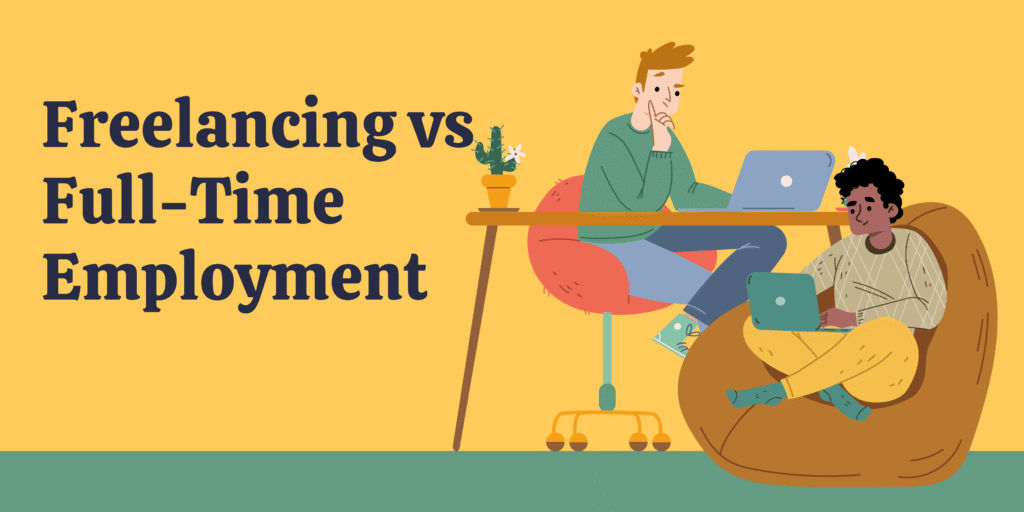
Freelancing vs Full-Time Employment (1)
Jobs & Careers

Freelancing vs Full-Time Employment: How to Know Which Path Is Right for You

Freelancing’s true income comparison requires subtracting self-employment taxes of 7.65 percent, individual health insurance of $400 to $800 monthly, employer retirement match equivalent, and the 20 to 30 percent of working hours non-billable time consumes from the project rate that hourly comparisons typically use. Income volatility requires three to six months of cash reserves and quarterly estimated tax infrastructure whose absence produces the feast-and-famine experience. Early-career professionals lose the mentorship and organizational learning that full-time employment provides — a career development cost the income premium may not justify.

Freelancing vs Full-Time Employment: How to Know Which Path Is Right for You Read Post »
Remote Work Productivity
Jobs & Careers

Remote Work Productivity: How to Stay Focused and Advance Your Career From Home

Remote work productivity requires deliberate environment design — dedicated workspace or consistent setup rituals, noise management through noise-canceling headphones, and time blocking that protects deep work periods during cognitive performance peaks. The visibility deficit that remote work creates requires proactive contribution documentation and communication rather than assuming good work speaks for itself across distance. Hard stop shutdown rituals that signal workday end compensate for the psychological detachment that physical office departure previously enforced automatically.

Remote Work Productivity: How to Stay Focused and Advance Your Career From Home Read Post »

How to Ace a Behavioral Interview
Jobs & Careers

How to Ace a Behavioral Interview: The STAR Method and Beyond

Behavioral interviews evaluate competency evidence from specific past experiences rather than general capability claims — the STAR method’s Action component should represent 60 to 70 percent of each response, with quantified results transforming good stories into compelling ones. Story banks of eight to ten versatile experiences covering multiple competencies outperform single-question story preparation. Honest negative story preparation for failure and conflict questions demonstrates self-awareness that positive story substitution consistently fails to deliver.

How to Ace a Behavioral Interview: The STAR Method and Beyond Read Post »

How to Ask for a Promotion
Jobs & Careers

How to Ask for a Promotion: What to Say and When to Say It

Promotion decisions are forward-looking assessments of next-level readiness, not backward-looking performance rewards — the framing that works presents current performance at the target level rather than tenure and past contributions. Timing requests before budget cycle deadlines and immediately after visible successes multiplies receptivity. Opening directly with the specific target title and framing the conversation as collaborative planning produces more productive outcomes than building gradually to the ask.

How to Ask for a Promotion: What to Say and When to Say It Read Post »

How to Prepare for a Job Interview What Actually Gets You the Offer
Jobs & Careers

How to Prepare for a Job Interview: What Actually Gets You the Offer

Job interview preparation has a well-documented problem — most candidates prepare for the interview they imagine rather than the interview that actually determines hiring decisions. The preparation that most candidates invest in is research about the company, rehearsal of answers to common questions, and selection of appropriate clothing — a foundation that is necessary but

How to Prepare for a Job Interview: What Actually Gets You the Offer Read Post »

What Is a LinkedIn Profile That Actually Gets You Noticed
Jobs & Careers

What Is a LinkedIn Profile That Actually Gets You Noticed (And How to Build One)

A LinkedIn profile that gets noticed combines keyword-optimized headlines and about sections for algorithm visibility with accomplishment-led experience descriptions and specific recommendations for human credibility. The headline that contains target job title plus specific skills produces recruiter search visibility that a current employer title alone cannot match. Recommendations from credible sources provide the external validation that self-reported accomplishments cannot replicate regardless of how well they are written.

What Is a LinkedIn Profile That Actually Gets You Noticed (And How to Build One) Read Post »

How to Change Careers Without Starting Over
Jobs & Careers

How to Change Careers Without Starting Over: A Realistic Guide

Career change succeeds when treated as a structured transition rather than a dramatic leap — building new field skills, network, and portfolio while existing employment provides financial stability. Transferable skills inventories reveal more applicable experience than career changers typically recognize. Bridge roles that value the combination of existing background and developing new capabilities minimize the starting-over problem. Financial preparation calibrated to the actual transition timeline rather than standard emergency fund guidelines keeps options open when they matter most.

How to Change Careers Without Starting Over: A Realistic Guide Read Post »

How to Write a Resume That Gets Past ATS and Actually Gets Read
Jobs & Careers

How to Write a Resume That Gets Past ATS and Actually Gets Read

Most resumes are filtered by ATS software before any human sees them — and formatting choices like tables, columns, and text boxes cause parsing failures that eliminate qualified candidates automatically. Incorporating exact keywords from job postings, using standard section headings, and submitting in Word format maximizes ATS passage. Quantified accomplishment statements rather than duty descriptions then compel the human reviewer whose initial scan takes 6 to 10 seconds.

How to Write a Resume That Gets Past ATS and Actually Gets Read Read Post »

How to Negotiate a Higher Salary (And What to Say When They Push Back)
Jobs & Careers

How to Negotiate a Higher Salary (And What to Say When They Push Back)

Salary negotiation produces financial returns that compound across an entire career — employers build negotiation room into initial offers and expect professional candidates to use it. Market-grounded asks, specific numbers rather than ranges, and prepared responses to common pushback scenarios transform negotiation from uncomfortable confrontation into a professional conversation. Beyond base salary, signing bonuses, remote flexibility, and early review timelines are frequently more negotiable than the base salary itself.

How to Negotiate a Higher Salary (And What to Say When They Push Back) Read Post »

Why Freelancing Is Growing Faster Than Traditional Employment
Jobs & Careers

Why Freelancing Is Growing Faster Than Traditional Employment (And What It Actually Takes to Succeed)

Freelancing is growing faster than traditional employment because supply-side drivers — professional autonomy, income ceiling expansion for in-demand skills, and lifestyle flexibility — combine with demand-side shifts toward flexible specialized talent access to produce structural rather than cyclical growth. The financial reality that enthusiasm underestimates includes self-employment tax, full health insurance costs, and the 30 to 40 percent rate premium over salary equivalents that sustainable independent work requires. Client acquisition from professional networks rather than platforms produces the most efficient early-stage revenue. The discipline infrastructure that replaces employment’s structural supports — financial reserves, business systems, and self-imposed work rhythm — is what separates freelancers who build sustainable independent careers from those who discover that the freedom and the difficulty were inseparable all along.

Why Freelancing Is Growing Faster Than Traditional Employment (And What It Actually Takes to Succeed) Read Post »

Scroll to Top