
Why Smart Thermostats Are One of the Best Home Upgrades You Can Make Right Now
Home & Living

Why Smart Thermostats Are One of the Best Home Upgrades You Can Make Right Now

Smart thermostats combine documented energy savings of 10 to 15 percent on heating and cooling costs, payback periods of one to two years at typical retail prices, utility rebate availability that further reduces acquisition cost, and genuine usability improvement through learning and geofencing automation that programmable thermostats never delivered in practice. Compatibility verification before purchase and a straightforward installation process that most homeowners can complete without professional help remove the barriers that make higher-cost home improvements more consequential decisions. The combination of low entry cost, reliable financial return, and immediate quality of life improvement makes the smart thermostat case unusually clear in a home improvement category where the cases are usually considerably more complicated.

Why Smart Thermostats Are One of the Best Home Upgrades You Can Make Right Now Read Post »

The Truth About Ultra-Processed Foods What the Latest Research Says About What You Are Eating
Health & Wellness

The Truth About Ultra-Processed Foods: What the Latest Research Says About What You Are Eating

Ultra-processed foods — industrial formulations distinguished by the NOVA classification system not by their nutrient content but by their degree of processing and additive composition — have been associated with cardiovascular disease, cancer, type 2 diabetes, and all-cause mortality in large cohort studies across multiple countries, and an NIH randomized controlled trial demonstrated that they drive approximately 500 calories per day of excess consumption beyond what nutrient-matched minimally processed diets produce. The mechanisms include palatability engineering that disrupts normal satiety signaling, rapid consumption that outpaces satiety hormone response, and gut microbiome disruption from emulsifiers and artificial additives. The practical implication is a directional shift toward minimally processed foods rather than a specific dietary prescription — and an honest engagement with a food environment that has been engineered to make the less healthy choice the default one.

The Truth About Ultra-Processed Foods: What the Latest Research Says About What You Are Eating Read Post »

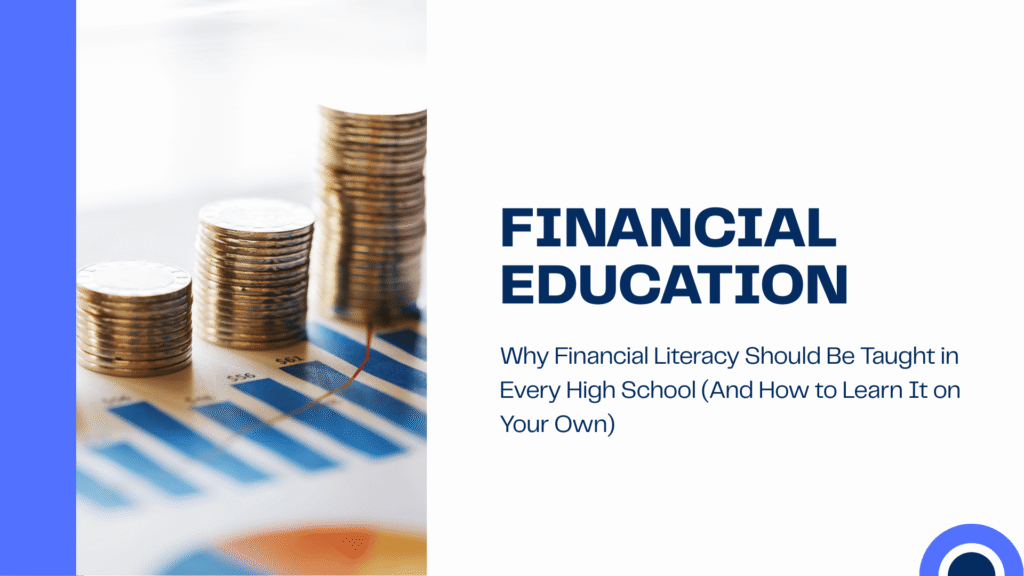
Why Financial Literacy Should Be Taught in Every High School (And How to Learn It on Your Own)
Education & Learning

Why Financial Literacy Should Be Taught in Every High School (And How to Learn It on Your Own)

Financial literacy education is absent from most high school curricula despite the fact that young adults face consequential financial decisions — student loans, credit cards, retirement accounts, insurance — within months of graduation without the foundational knowledge those decisions require. The compound interest mechanics that determine investment outcomes and debt costs, the credit score factors that affect borrowing rates for decades, and the tax and insurance basics that prevent the most financially damaging surprises are the content that the educational gap leaves unaddressed. The self-education path that fills this gap is well-resourced through accessible books, structured online content, and the deliberate connection of financial learning to specific decisions being made — and the return on that learning investment compounds as reliably as the financial principles it teaches.

Why Financial Literacy Should Be Taught in Every High School (And How to Learn It on Your Own) Read Post »

Why Buying a Used Electric Vehicle Is Becoming a Smarter Decision Every Year
Automotive

Why Buying a Used Electric Vehicle Is Becoming a Smarter Decision Every Year

The used electric vehicle market has reached a convergence of favorable conditions — aggressive depreciation on late-model vehicles, federal tax credits now extended to used EV purchases, accumulated battery degradation data that produces more reassuring real-world outcomes than theoretical projections suggested, and charging infrastructure mature enough to support practical ownership — that makes the financial case for used over new stronger than it has ever been. Informed model selection, battery health assessment before purchase, and an accurate accounting of charging access are the preparation steps that convert a generally favorable market condition into a specifically sound individual purchase decision.

Why Buying a Used Electric Vehicle Is Becoming a Smarter Decision Every Year Read Post »

Why AI Is Changing the Legal Industry Faster Than Anyone Expected
Artificial Intelligence

Why AI Is Changing the Legal Industry Faster Than Anyone Expected

AI is transforming the legal industry at a pace that has surprised even optimistic observers — automating document review, compressing legal research timelines, and making contract analysis and due diligence functions that previously required significant attorney hours achievable in fractions of the time. The transformation’s most significant implications extend beyond law firm economics into the access to justice question, where AI-powered tools are beginning to address the cost barriers that have made civil legal representation inaccessible to a large portion of the population with genuine legal needs. The legal professionals best positioned in this environment are those developing the judgment and supervisory skills to work effectively with AI tools rather than resisting the transformation those tools are producing regardless.

Why AI Is Changing the Legal Industry Faster Than Anyone Expected Read Post »

Why Georgia (The Country) Is the Most Underrated Travel Destination in the World Right Now
Travel & Destinations

Why Georgia (The Country) Is the Most Underrated Travel Destination in the World Right Now

Georgia offers a combination that serious travelers recognize as rare — mountain landscapes rivaling the Alps without the tourist saturation, the world’s oldest winemaking tradition still practiced in villages using methods unchanged for millennia, a food culture of extraordinary depth and hospitality, and a capital city whose cultural layering produces an urban experience that resists the simple categorization that more tourist-shaped cities allow — at a daily cost structure and with a visa accessibility that its objective quality does not require. Its underrated status is genuine rather than contrived, and the window for experiencing it before mainstream discovery changes its character is worth taking seriously by any traveler who values the unrepeatable quality of a destination encountered before the world catches up with what it has always been.

Why Georgia (The Country) Is the Most Underrated Travel Destination in the World Right Now Read Post »

Why Streaming Has Gotten More Expensive and Whether It Is Still Worth It
Technology & Gadgets

Why Streaming Has Gotten More Expensive and Whether It Is Still Worth It

Streaming prices have risen because the subscriber growth that subsidized introductory pricing has plateaued and the industry has moved from growth investment to profitability pursuit — a transition that has produced price increases, ad-supported tier expansion, and password sharing enforcement across major platforms. The fragmentation of content across multiple services has driven multi-subscription households toward total monthly costs that compare unfavorably with the cable bundles streaming was positioned to replace. The household that has not deliberately audited its streaming subscriptions since initially subscribing is almost certainly paying for more than its viewing habits justify — and the rotational consumption model that matches subscription periods to actual content interest is the most effective framework for restoring the value that the original streaming promise delivered.

Why Streaming Has Gotten More Expensive and Whether It Is Still Worth It Read Post »

Why Most People Underestimate How Much They Need to Retire
Personal Finance

Why Most People Underestimate How Much They Need to Retire (And How to Calculate It Honestly)

Retirement savings underestimation is a structural problem produced by replacement rate heuristics that understate actual spending, longevity projections anchored to population averages rather than conditional life expectancy, and healthcare cost assumptions that do not reflect the trajectory of actual retirement medical expenses. The honest calculation — built from a detailed expense-based retirement budget, projected with realistic healthcare inflation, and translated into a portfolio target through a sustainable withdrawal rate — produces a savings target that is almost always higher than conventional planning suggests. Knowing the real number early enough to respond to it is the difference between a retirement plan that delivers and one that disappoints when adjustment is no longer possible.

Why Most People Underestimate How Much They Need to Retire (And How to Calculate It Honestly) Read Post »

Why Mid-Career Professionals Are Going Back to School
Jobs & Careers

Why Mid-Career Professionals Are Going Back to School (And Whether It Is Actually Worth It)

Mid-career professionals are returning to formal education in response to genuine labor market signals — credential-gated field transitions, skill gaps in rapidly evolving industries, and the perceived advancement value of recognized credentials in competitive fields. The financial return on that investment varies dramatically enough by program tier, target field, and individual circumstance that the average figures in program marketing are nearly meaningless as individual planning inputs. The cases that most clearly justify the investment involve credential-gated transitions, employer sponsorship that shifts financial risk, or specific programs with documented placement outcomes in the target field. The alternatives — structured online programs, professional certificates, and portfolio-based credentials — deserve honest comparison against formal degree costs for the specific outcomes being pursued before the enrollment decision is made.

Why Mid-Career Professionals Are Going Back to School (And Whether It Is Actually Worth It) Read Post »

What Every Homeowner Needs to Know About Their Policy Before Filing a Claim
Insurance

What Every Homeowner Needs to Know About Their Policy Before Filing a Claim

Homeowner’s insurance produces its worst claim outcomes for homeowners who discover its provisions at the moment they become relevant rather than before. Dwelling coverage limits that have not been updated to reflect current construction costs, personal property sublimits for jewelry and valuables that are far below actual holdings, the categorical flood exclusion that most homeowners do not know exists until water enters their home, and post-loss mitigation duties whose failure can void otherwise valid claims are the provisions that most consistently produce expensive surprises. Reading the policy, updating limits, scheduling high-value items, and maintaining a documented home inventory are the preparation steps that close the gap between what coverage appears to provide and what it actually delivers.

What Every Homeowner Needs to Know About Their Policy Before Filing a Claim Read Post »

Scroll to Top