
Author name: Elizabeth Lyon

Why the Balkans Are Emerging as Europe's Most Exciting Travel Region Right Now
Travel & Destinations

Why the Balkans Are Emerging as Europe’s Most Exciting Travel Region Right Now

The Balkans offer the combination that Europe’s most famous destinations have largely surrendered to their own popularity — extraordinary natural and cultural content, genuine historical depth that is immediate rather than packaged, and a pricing structure that makes extended serious engagement genuinely possible — at visitor volumes that allow the kind of unhurried, unmediated experience that heavy tourism transforms into managed approximation. Croatia’s Dalmatian coast, Montenegro’s Bay of Kotor, Sarajevo’s layered history, Albania’s developing Riviera, and the affordable cultural depth of Serbia and North Macedonia provide a regional travel portfolio whose range and quality the rest of Europe cannot match at comparable cost. The window for experiencing the Balkans before the discovery curve changes what they currently offer is visible, finite, and worth acting on.

Why the Balkans Are Emerging as Europe’s Most Exciting Travel Region Right Now Read Post »
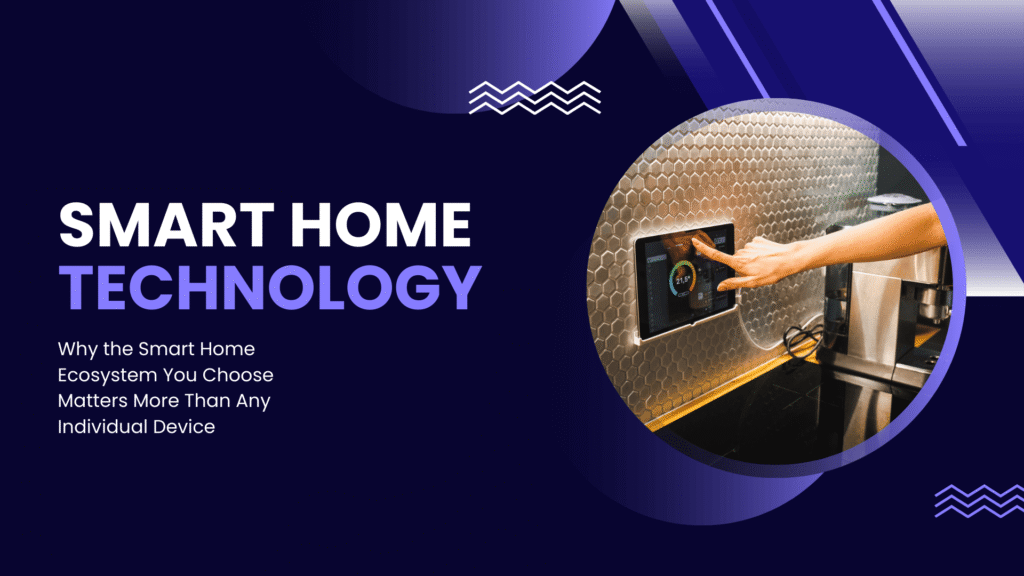
Why the Smart Home Ecosystem You Choose Matters More Than Any Individual Device
Technology & Gadgets

Why the Smart Home Ecosystem You Choose Matters More Than Any Individual Device

The smart home ecosystem — the platform connecting individual devices into a coordinated, automatable system — is a more consequential purchase decision than any individual device within it, because it determines compatibility, integration quality, and the automation logic that transforms separate smart devices into an actually smart home. Amazon Alexa, Google Home, and Apple HomeKit offer meaningfully different trade-offs between device breadth, privacy posture, and integration depth that map better or worse onto different household priorities. The Matter cross-platform standard has reduced device compatibility lock-in without eliminating the ecosystem differentiation that makes the platform choice matter above the compatibility layer. Choosing based on existing household devices, privacy priorities, and the specific use cases that deliver the most immediate value produces a foundation that subsequent purchases can build on coherently.

Why the Smart Home Ecosystem You Choose Matters More Than Any Individual Device Read Post »

Why Lifestyle Inflation Is the Silent Killer of Long-Term Wealth
Personal Finance

Why Lifestyle Inflation Is the Silent Killer of Long-Term Wealth (And How to Stop It)

Lifestyle inflation prevents wealth accumulation not through dramatic financial mistakes but through the gradual expansion of spending that follows every income increase and that feels locally justified at each individual decision while collectively explaining the gap between income trajectory and financial security that most high earners eventually notice. The savings rate commitment — a defined percentage of gross income directed to savings before spending decisions are made, maintained across income levels — is the mechanism that prevents lifestyle inflation’s primary mode of action. Every income increase that is committed to savings before it is spent on lifestyle expansion builds wealth; every income increase that flows through default spending channels into expanded consumption builds lifestyle security without building financial security, and the distinction between the two is what lifestyle inflation consistently obscures.

Why Lifestyle Inflation Is the Silent Killer of Long-Term Wealth (And How to Stop It) Read Post »

Why Remote Work Is Reshaping Where People Choose to Live
Jobs & Careers

Why Remote Work Is Reshaping Where People Choose to Live (And What It Means for Your Career)

Remote work has decoupled the relationship between where people work and where they live at a scale that is producing genuine structural geographic redistribution — documented in census data, IRS migration statistics, and real estate markets that have absorbed workers leaving high-cost metros for locations offering lower housing costs, natural amenities, and quality of life characteristics that proximity to major labor markets once required sacrificing. The financial opportunity of accessing high-salary labor markets at lower cost-of-living locations is real and consequential. The career trade-offs — reduced proximity advantage, visibility deficits relative to in-office colleagues, and advancement patterns that physical distance can affect — require deliberate management that the enthusiasm for location independence has not always foregrounded with the honesty the decision deserves.

Why Remote Work Is Reshaping Where People Choose to Live (And What It Means for Your Career) Read Post »

Why Life Insurance Gets More Expensive the Longer You Wait
Insurance

Why Life Insurance Gets More Expensive the Longer You Wait (And When to Lock In Your Rate)

Life insurance premiums are determined at application by age and health status and remain fixed for the policy duration — making each year of delay a permanent premium increase whose dollar cost over the policy term is specific and calculable. Age alone increases premiums predictably, while health changes during delay periods can produce rate classification changes that compound the age-related cost in ways that earlier application would have avoided entirely. The right time to lock in a rate is when financial dependents are present and favorable health classification is current — a convergence that is most reliably present in the late twenties and early thirties for most people, and that becomes progressively less reliable to assume as age and health trajectories advance.

Why Life Insurance Gets More Expensive the Longer You Wait (And When to Lock In Your Rate) Read Post »

Why Tankless Water Heaters Are Worth the Upgrade
Home & Living

Why Tankless Water Heaters Are Worth the Upgrade (And What to Know Before You Install One)

Tankless water heaters eliminate the standby energy losses of conventional tank heaters by heating water on demand, producing efficiency advantages that the Department of Energy estimates at 8 to 34 percent depending on usage patterns — with a cost premium whose payback period falls within the unit’s operational lifespan in most installations. The endless hot water benefit is real within the unit’s flow rate capacity, which requires accurate sizing for actual simultaneous household demand rather than reliance on marketing claims. Gas line adequacy, venting requirements, and annual descaling in hard water areas are the installation and maintenance considerations that determine whether the upgrade performs as expected — and addressing them before purchase rather than after is what separates a successful tankless installation from an expensive one.

Why Tankless Water Heaters Are Worth the Upgrade (And What to Know Before You Install One) Read Post »

Why Sleep Is the Most Underrated Performance Variable in Your Health
Health & Wellness

Why Sleep Is the Most Underrated Performance Variable in Your Health

Sleep performs active biological functions — glymphatic waste clearance, memory consolidation, immune regulation, and metabolic maintenance — that no other state replicates and that accumulate in deficit when sleep is chronically insufficient. The cognitive performance degradation that sleep restriction produces is both larger than most people appreciate and largely invisible to the sleep-deprived individual whose subjective sense of adaptation does not reflect the objective impairment that measurement reveals. The physical health consequences extend to cardiovascular disease risk, metabolic dysfunction, and immune impairment that population research has documented at a magnitude that makes sleep optimization one of the highest-return health behaviors available — and one of the most consistently underinvested in by a culture that has treated its sacrifice as evidence of productive commitment.

Why Sleep Is the Most Underrated Performance Variable in Your Health Read Post »

Why Online Degrees Are Finally Being Taken Seriously by Employers
Education & Learning

Why Online Degrees Are Finally Being Taken Seriously by Employers (And Which Ones Still Are Not)

Online degrees have achieved substantially improved employer acceptance driven by pandemic normalization of remote learning, the expansion of online programs from flagship institutions whose reputations precede the modality, and the accumulation of employment outcome data that makes professional value demonstrable. The legitimate skepticism that remains concentrates in for-profit institutions where quality concerns are institutional rather than modality-based, and in clinical and professional fields where embodied in-person learning is genuinely formative rather than incidentally traditional. Evaluating a specific online program by its institutional accreditation, employment outcomes data, and field-specific acceptance produces more reliable guidance than any general assessment of online degree credibility.

Why Online Degrees Are Finally Being Taken Seriously by Employers (And Which Ones Still Are Not) Read Post »

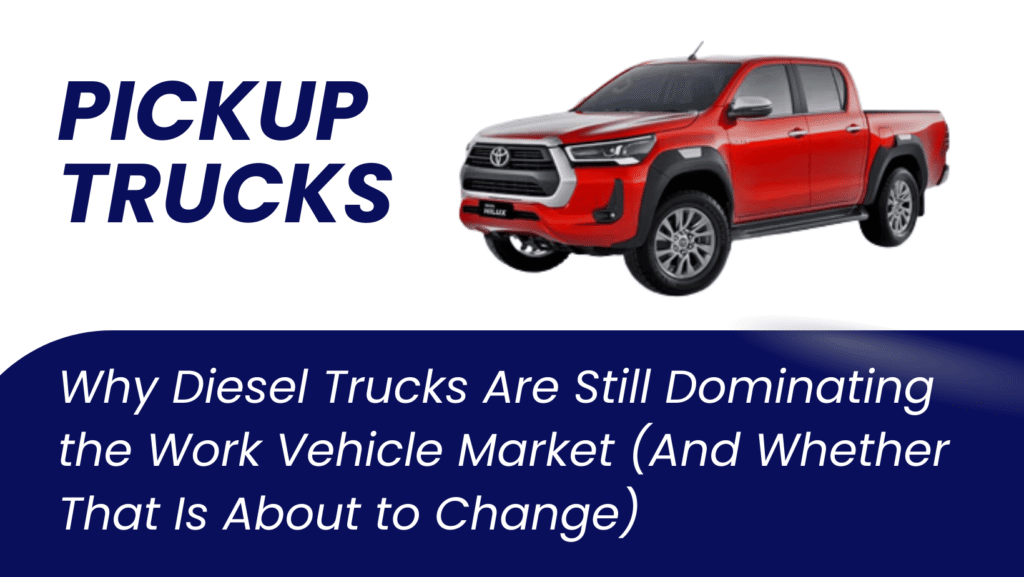
Why Diesel Trucks Are Still Dominating the Work Vehicle Market
Automotive

Why Diesel Trucks Are Still Dominating the Work Vehicle Market (And Whether That Is About to Change)

Diesel continues to dominate work vehicle applications because its torque delivery, energy density, refueling speed, and infrastructure ubiquity represent genuine engineering advantages in commercial, agricultural, and construction contexts where electric alternatives face real constraints rather than merely perceptual resistance. The transition already underway in light-duty commercial fleets with predictable routes and depot charging capability will accelerate — but heavy-duty commercial applications where range, payload, towing capacity, and remote operation requirements align most decisively with diesel’s strengths face a transition timeline that infrastructure and battery technology constraints make longer and less certain than the general electrification narrative suggests.

Why Diesel Trucks Are Still Dominating the Work Vehicle Market (And Whether That Is About to Change) Read Post »

How AI Is Changing the Way We Search for Information
Artificial Intelligence

How AI Is Changing the Way We Search for Information (And What It Means for How You Find Answers)

AI search is changing the fundamental interaction between human questions and internet answers — from keyword navigation of ranked source lists to receipt of synthesized direct answers whose accuracy is opaque and whose confident presentation provides no reliable signal about the quality of the underlying synthesis. The convenience gain is real and the epistemological cost is equally real: reduced source visibility, less practice of the evaluative skills that information literacy requires, and a trust calibration challenge that is more demanding in an AI search environment than the keyword search era prepared most users for. The habits that produce reliable information finding have not changed — verification, source engagement, and healthy skepticism of confident synthesis — but they require more deliberate maintenance in an environment designed to make accepting synthesized answers feel sufficient.

How AI Is Changing the Way We Search for Information (And What It Means for How You Find Answers) Read Post »

Scroll to Top