Small living rooms have a reputation for being a design problem without a satisfying solution. The instinct when space feels tight is to want more of it — more square footage, higher ceilings, fewer walls. But the experience of a room feeling small is rarely purely about its physical dimensions. It is about how those dimensions are perceived, and perception is something that thoughtful design can influence dramatically without touching a single load-bearing wall. The living rooms that feel genuinely spacious despite modest measurements are not accidents of architecture. They are the result of specific, deliberate decisions about color, furniture, light, and arrangement that work with the psychology of spatial perception rather than against it.
Color and Light Do More Heavy Lifting Than Most People Realize
The relationship between color and perceived space is well established in design, but the application of that principle is frequently misunderstood. The conventional advice to paint small rooms white is not wrong — light, neutral tones reflect more light and create less visual boundary — but it is incomplete. The more nuanced and more effective principle is tonal consistency. A room where walls, trim, and ceiling are painted in closely related tones within the same color family creates a continuous visual field that makes boundaries feel less defined and the space feel more expansive than a room with high contrast between surfaces.
Natural light amplifies this effect significantly. Window treatments that stop well above the frame and extend beyond it on both sides — mounted close to the ceiling and wider than the window itself — create the visual impression of a larger opening without changing the window’s actual dimensions. Sheer fabrics that allow light to pass through while maintaining privacy keep the room visually connected to the exterior, which extends the perceived depth of the space beyond the physical walls. Mirrors placed to reflect natural light sources rather than simply hung decoratively serve as a passive amplification system for whatever daylight the room receives.
Furniture Scale and Arrangement Are Where Most Small Rooms Go Wrong
The most common mistake in small living rooms is furniture that is either too large for the space or arranged in a way that works against it. Oversized sofas pushed against every wall in an attempt to maximize floor space produce a room that feels smaller, not larger, because the visual mass of the furniture dominates the field of view and eliminates the breathing room that makes a space feel livable.
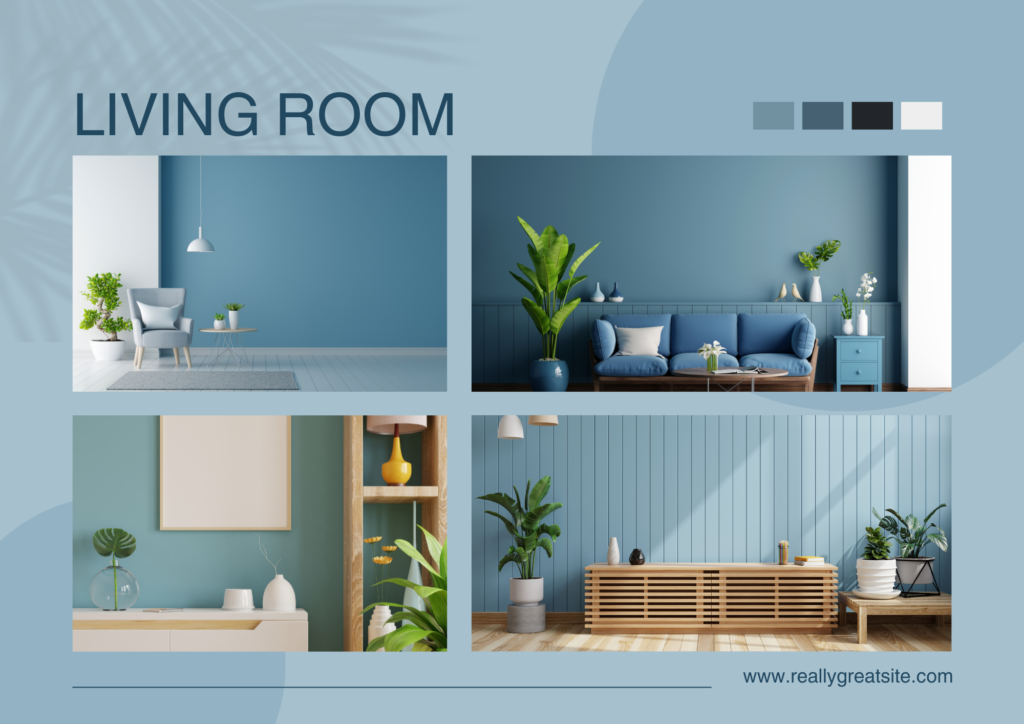
Furniture with exposed legs — sofas, chairs, and coffee tables that allow the eye to see the floor beneath them — creates a visual continuity at ground level that makes the room feel larger. A sofa that sits directly on the floor with a solid base interrupts that continuity and makes the floor feel shorter and the ceiling feel lower by contrast. Scaling down to furniture that fits the room rather than filling it, and leaving deliberate space between pieces rather than crowding them edge to edge, produces a room that feels considered and spacious rather than compressed and improvised.
Floating furniture away from the walls — even by a few inches — counterintuitively makes a room feel larger. When every piece is pushed to a perimeter, the center of the room becomes an empty void rather than a functional space, and the eye reads the room as a container rather than a place. Pulling furniture toward the center creates a defined conversation area that gives the room a sense of purpose and makes its dimensions feel intentional rather than limiting.
Vertical Space Is the Most Underused Resource in Small Rooms
Small rooms almost universally suffer from a failure to engage the vertical dimension. When furniture, art, and storage all cluster in the lower half of the room’s height, the ceiling feels low, the walls feel close, and the overall scale of the space reads as compressed. Directing the eye upward through deliberate design choices changes the perceived proportions of the room more effectively than almost any horizontal adjustment.
Tall bookshelves and storage units that reach toward the ceiling draw the eye upward and make the full height of the room legible in a way that shorter furniture never achieves. Curtains hung at ceiling height rather than window height reinforce the same vertical emphasis. Art arranged in vertical groupings rather than spread horizontally across a wall encourages the eye to travel up and creates a sense of height that horizontal arrangements suppress. Even a statement floor lamp with a tall, slender profile contributes to this vertical reading of the room in ways that table lamps or ceiling fixtures alone cannot.
Reducing Visual Clutter Changes How Large the Room Feels Immediately
No design intervention in a small living room produces faster results than reducing visual clutter, and none is more consistently underestimated. Clutter does not just make a room harder to clean — it fragments the visual field into dozens of competing elements that the brain processes as density, which reads directly as small. A room with fewer, more deliberate objects feels larger than a room of identical dimensions filled with accumulated possessions and surfaces covered in unrelated items.
The practical application of this principle does not require minimalism as an aesthetic. It requires storage that conceals rather than displays, surfaces that breathe rather than accumulate, and a selective approach to what is visible at any given time. Closed storage — cabinets rather than open shelves where possible, ottomans with interior storage, built-in units that integrate with the wall — removes visual noise while maintaining function. What remains in view becomes more meaningful, and the room becomes more spacious, simply because the eye has less competing for its attention.
Conclusion
A small living room is a design challenge, not a design sentence. The tools that make modest spaces feel genuinely generous are not expensive, structural, or beyond the reach of anyone willing to approach the room with intention. Color consistency, strategic use of light, appropriately scaled furniture arranged with purpose, vertical emphasis, and deliberate reduction of visual noise are changes that cost far less than renovation and often deliver more noticeable results. Space is partly a physical reality and partly a perception — and perception, it turns out, is remarkably responsive to the right decisions.