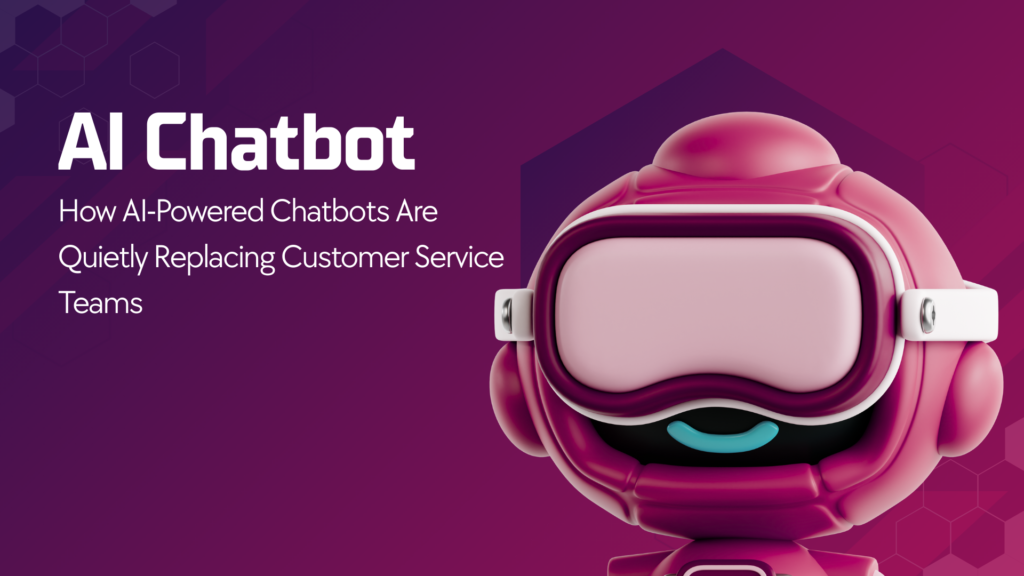
The last time you typed “I need help with my order” into a chat window, chances are a human never read it. A machine did — and it probably solved your problem before you even realized no one was on the other end. AI-powered chatbots have moved far beyond the clunky, frustrating bots of a decade ago. Today, they are faster, smarter, and increasingly indistinguishable from the real thing. Businesses are taking notice, and the shift happening inside customer service departments is anything but small.
From Scripted Responses to Real Conversations
Early chatbots operated on rigid decision trees. Ask something slightly outside the script, and you’d hit a dead end. That era is over. Modern AI chatbots are built on large language models that understand context, tone, and intent. They can handle follow-up questions, detect frustration in a customer’s message, and adjust their responses accordingly.
Companies like Intercom, Zendesk, and Salesforce have already embedded AI deeply into their support platforms. These tools don’t just answer FAQs — they pull up order histories, process refunds, update account details, and escalate complex issues to human agents only when absolutely necessary. The result is a support experience that feels remarkably seamless, even when there’s no human involved at all.
The Business Case Is Too Strong to Ignore
Cost is the driving force behind the rapid adoption of AI in customer service, and the numbers are hard to argue with. A single human support agent can handle one conversation at a time. An AI chatbot can manage thousands simultaneously, around the clock, without breaks, sick days, or training costs.
For mid-size and enterprise businesses, this translates into dramatic reductions in operating expenses. Beyond cost savings, AI chatbots deliver consistency — every customer gets the same quality of response regardless of the time of day or how long the queue is. For businesses that live and die by customer satisfaction scores, that kind of reliability is a serious competitive advantage.
What Human Agents Are Being Left to Handle
This doesn’t mean customer service jobs are disappearing overnight, but the nature of those jobs is changing fast. Human agents are increasingly being repositioned to handle what AI genuinely cannot — emotionally complex situations, high-stakes complaints, nuanced negotiations, and cases that require empathy beyond what any algorithm can convincingly deliver.
Think of a customer calling in after a house fire to file an insurance claim, or someone disputing a charge that involved a deeply personal situation. These interactions demand emotional intelligence, careful listening, and real human judgment. AI handles the volume; humans handle the weight. The workforce isn’t being eliminated — it’s being filtered toward its highest value.
The Risks Businesses Are Still Figuring Out
AI chatbots are not without their flaws, and businesses are learning this the hard way. Hallucinations — where AI confidently provides incorrect information — remain a genuine problem in customer-facing deployments. A chatbot that gives a customer the wrong return policy or incorrect billing information doesn’t just cause frustration; it creates liability.
There’s also the question of customer trust. Many people still want to know a human is available if things go wrong. Businesses that go all-in on AI without maintaining a credible human fallback risk alienating customers who feel trapped in a loop with a machine. The companies doing this well are the ones treating AI as the first line of response, not the only line.
Conclusion
AI-powered chatbots are not coming for customer service — they are already here, already working, and already reshaping what the industry looks like. The transformation is quiet precisely because it works. Businesses that understand the balance between AI efficiency and human empathy will be the ones that turn this shift into a long-term advantage. The future of customer service isn’t human or machine — it’s both, working in the right roles.