Morocco sits closer to Europe than most travelers realize — three hours from London, two and a half from Paris, and less than an hour from southern Spain — and delivers a cultural contrast whose intensity per travel hour ratio is among the highest available from Western Europe. The medinas, mountains, desert, and Atlantic and Mediterranean coastlines that constitute Morocco’s geographic range produce a travel experience whose variety within a single country rivals multi-country itineraries elsewhere, and the costs that make extended Morocco travel financially accessible to travelers who find Western Europe increasingly expensive have risen enough to require updated expectations while remaining significantly lower than comparable European destinations. The 2026 traveler who arrives with accurate information about what Morocco costs, what the cultural context requires, and which specific destinations deliver the most rewarding experiences returns with the perspective that consistent five-star traveler reviews of this destination reflect.
What Morocco Actually Costs in 2026
Morocco’s cost structure has risen meaningfully since the pre-pandemic period — the $20-per-day figures that some older travel content still implies are no longer achievable without compromises that most Western travelers find uncomfortable — while remaining substantially lower than comparable travel in Southern Europe at every budget level. The honest daily budget figures for 2026 reflect the combination of accommodation inflation in the most popular destinations and the food and transportation costs that remain genuinely accessible.
Budget travelers staying in hostel dormitories or the basic guesthouses whose availability outside the most tourist-heavy medina zones remains good, eating at local restaurants and street food stalls whose tagine and harira soup prices remain genuinely inexpensive, and using public buses and shared taxis for intercity travel can manage $35 to $55 per day — a budget that requires intentional frugality in accommodation selection and excludes most guided excursions. Midrange travelers staying in the riads — the traditional courtyard guesthouses whose renovation has produced some of the most atmospheric accommodation available anywhere in the world — eating at the mix of local and tourist-oriented restaurants, and including occasional guided activities should budget $100 to $180 per day. The traveler whose priority is comfortable riads in prime medina locations, private car transport between cities, and guided desert and mountain excursions should budget $200 to $350 per day — figures that buy experiences whose quality significantly exceeds what equivalent spending produces in Western European destinations.
The specific cost items whose advance knowledge most affects budget planning are riad pricing in Marrakech and Fes — the most atmospheric properties book months in advance and command $80 to $200 per night — and the Sahara desert excursion costs that vary from $80 to $200 per person for budget group tours to $300 to $600 for private overnight camel trekking with luxury desert camp accommodation. Transport between major cities on the Al Boraq high-speed train connecting Casablanca, Rabat, and Tangier costs $10 to $25 depending on class, and the CTM bus network connecting cities beyond the high-speed rail corridor provides comfortable intercity transport at $8 to $20 per journey.
Marrakech: The Entry Point Whose Depth Rewards Investment
Marrakech is most travelers’ Morocco entry point and the city whose initial sensory intensity — the Djemaa el-Fna square’s storytellers, musicians, snake charmers, and food stalls, the souks whose labyrinthine organization by craft type has persisted for centuries, and the call to prayer that punctuates the medina’s rhythm — produces either immediate enchantment or overwhelming disorientation depending on the traveler’s preparation and pace. Both responses are appropriate to a city whose medieval medina UNESCO listing reflects the genuine historical preservation that distinguishes it from destinations whose old town character is primarily reconstructed for tourism.
The Marrakech beyond the Djemaa el-Fna — the Saadian Tombs, the Bahia Palace, the Majorelle Garden whose vivid blue architecture Yves Saint Laurent restored and whose Berber museum provides the cultural context for Morocco’s indigenous population that the medina’s Arab-Andalusian architecture does not, and the hammam experience whose combination of steam, exfoliation, and massage produces the bathing ritual that has been central to Moroccan social life for centuries — warrants a three to four day allocation rather than the one to two day stopover that travelers trying to cover maximum ground allocate. The day trip to the Atlas Mountains and the Berber village of Imlil whose trailhead provides access to North Africa’s highest peak for serious trekkers is the excursion that most Marrakech visitors identify as their most memorable day — close enough for a day trip and rewarding enough to justify an overnight stay for the traveler whose itinerary permits.
Fes: The Imperial City Whose Medina Is the World’s Largest Living Medieval City
Fes el-Bali — the old city of Fes whose approximately 9,400 lanes and alleys constitute the world’s largest car-free urban area and whose tanneries, madrasas, and the Al-Qarawiyyin university mosque whose founding in 859 AD makes it the world’s oldest continuously operating university have been producing the same goods and maintaining the same trades for a millennium — is the Morocco experience that most rewarding for travelers whose priority is historical depth over sensory spectacle. The tanneries whose multi-colored dye vats are viewed from the leather goods shops whose balconies overlook them produce the image that has made Fes one of Morocco’s most photographed destinations — and whose olfactory reality the mint sprigs that shop owners offer visitors acknowledge without fully addressing.
The navigation challenge that Fes el-Bali presents — the medina whose organic medieval street plan was not designed for navigation and whose similarity of appearance across its vastness makes getting lost the reliable experience of every first visit — is best approached with a local guide for the first day rather than the map application that provides coordinates without the contextual understanding of which direction leads toward a landmark and which leads deeper into the residential quarters that tourists rarely visit. The licensed guide whose services cost $30 to $50 for a half day provides navigation, historical context, and the craft workshop access whose visits the guide’s relationships facilitate — an investment whose value in Fes specifically exceeds its value in the more navigable cities whose medinas are smaller and more tourist-oriented in their spatial organization.
The Sahara and the South: The Experience That Justifies the Journey
The Sahara desert experience that Merzouga and the Erg Chebbi dunes provide — the overnight camel trek to a desert camp whose elevation above the surrounding sand sea produces the sunrise over the dunes whose silence and scale resets perspective in ways that urban travel cannot replicate — is the Morocco experience that most travelers identify as their trip’s most memorable single night. The journey to Merzouga from Marrakech is a full day by car through the High Atlas passes and the Draa Valley whose kasbahs and palm oases produce a landscape transition whose stages are each visually distinct — a drive that the traveler with a private driver can pace with stops that the bus cannot accommodate and whose efficiency the self-driver achieves at the cost of navigating mountain roads whose conditions require attention.
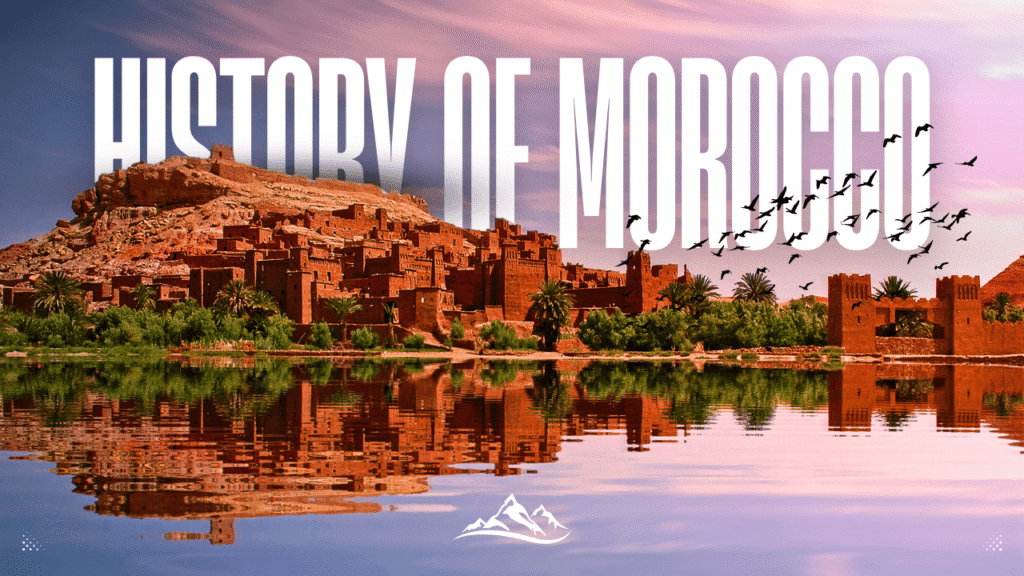
The southern cities of Ouarzazate — the film production center whose Atlas Film Studios has served as the backdrop for Lawrence of Arabia, Gladiator, and Game of Thrones — and Aït Benhaddou whose ksar of earthen architecture UNESCO has listed as a World Heritage Site provide the historical and cinematic context that the desert journey passes through rather than the primary destination whose accommodation and restaurant infrastructure supports extended stays.
Practical Considerations for 2026 Travelers
The cultural context that Morocco’s Islamic society requires of visitors — modest dress in medinas and religious sites, awareness of Ramadan timing whose effect on restaurant hours and crowd patterns significantly affects the travel experience for the unprepared visitor, and the negotiation culture of the souk whose fixed-price assumption produces the overpayment that haggling prevents — is the preparation that most directly affects daily experience quality for travelers who arrive without it. Ramadan in 2026 falls in late February through late March — a timing whose implication for travelers is that many restaurants in traditional areas reduce daytime service, the evening atmosphere of the Djemaa el-Fna intensifies with the iftar breaking of the fast, and the cultural insight available to travelers who are present during this period exceeds what non-Ramadan timing provides despite the daytime service adjustments.
Conclusion
Morocco in 2026 delivers the cultural contrast, landscape variety, and historical depth that its reputation promises at costs that remain accessible for travelers who have recalibrated expectations from pre-pandemic budget travel figures to the honest 2026 range. Marrakech provides the sensory intensity and atmospheric riad accommodation whose combination makes it the natural entry point. Fes provides the historical depth that serious culture travelers find most rewarding. The Sahara provides the landscape experience that no other Morocco destination replicates. The traveler who allocates ten to fourteen days across these three destinations and the journeys between them experiences Morocco’s full range at a pace that the country’s depth rewards.