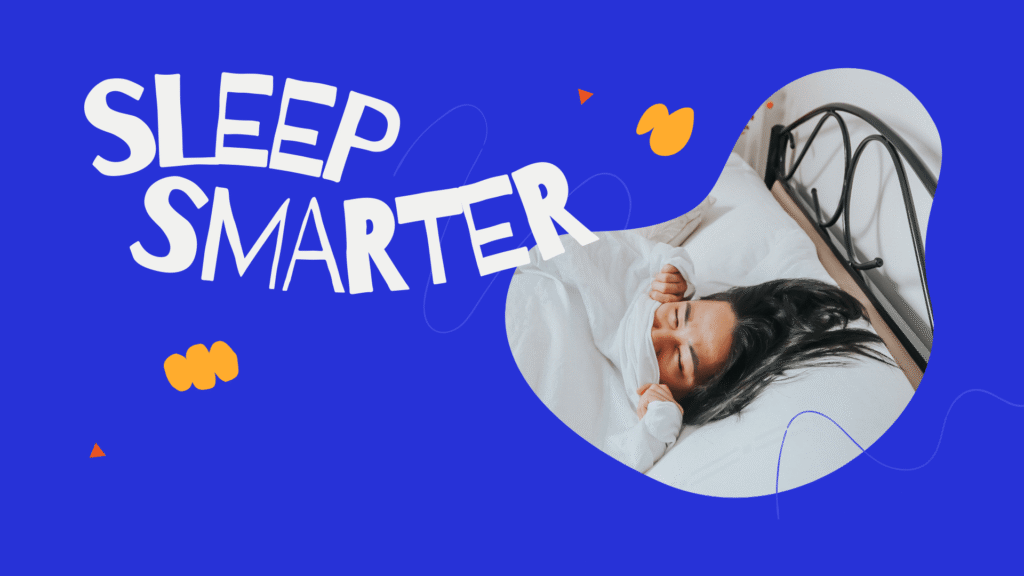
Sleep has spent decades occupying an awkward position in the cultural conversation about health and performance — acknowledged as necessary in the abstract while being treated as negotiable in practice, the first thing sacrificed when productivity demands increase and the last thing optimized when health improvements are being pursued. The hustle culture that defined professional ambition for a generation treated sleep deprivation as evidence of commitment, and the medical training culture that produces the physicians who are supposed to advise patients on sleep routinely required residents to work shifts whose length produced the kind of cognitive impairment that would be considered disqualifying in any safety-critical profession outside medicine. The research that has accumulated on sleep’s role in virtually every dimension of human health and performance has not produced a cultural response proportionate to its findings — and the gap between what sleep science has established and how seriously most people treat their sleep is one of the more consequential mismatches between evidence and behavior in contemporary health culture.
What Sleep Actually Does That Nothing Else Can Replace
The functions that sleep performs in the body and brain are not passive recovery processes that rest alone could substitute for — they are active, specific biological operations that require sleep’s distinct physiological states to execute and that accumulate in deficit when sleep is insufficient in duration or quality. The glymphatic system — the brain’s waste clearance mechanism, which uses the cerebrospinal fluid flow that occurs predominantly during sleep to flush metabolic byproducts including the amyloid beta and tau proteins associated with Alzheimer’s disease — operates at dramatically reduced efficiency during waking hours. The clearance of these proteins is not a process that can be compensated for through other means or postponed indefinitely without accumulating consequences — it is a maintenance function that sleep performs on a nightly basis and that chronic sleep deprivation compromises in ways whose long-term neurological implications are increasingly well documented.
Memory consolidation — the process by which experiences, information, and skills acquired during waking hours are stabilized, integrated, and made retrievable — occurs predominantly during sleep through mechanisms that involve both slow-wave sleep and REM sleep in specific and complementary ways. The student who studies and then sleeps consolidates what they learned more effectively than the student who studies for the same duration without sleeping, and the skill that has been practiced but not yet slept on is less reliably retrievable than the same skill after a consolidating sleep period. These are not marginal effects — they are large enough and consistent enough across the research literature to represent a fundamental challenge to the productivity logic that treats the hours recovered by sleeping less as straightforwardly additive to useful cognitive output.
The Performance Costs That Accumulate Without Adequate Sleep
The cognitive performance effects of sleep deprivation are among the most consistently documented findings in sleep research, and their magnitude is striking enough to warrant more attention than the normalization of sleep deprivation in professional culture has allowed them to receive. Reaction time, sustained attention, working memory capacity, decision-making quality, and emotional regulation all degrade in measurable and significant ways with sleep restriction — and the degradation is not fully perceived by the sleep-deprived individual, whose subjective assessment of their own performance becomes increasingly inaccurate as sleep debt accumulates.
The last finding is among the most practically significant in the sleep research literature. People who have been sleeping six hours per night for two weeks perform as poorly on objective cognitive tests as people who have been kept awake for 24 hours straight — but their subjective sense of sleepiness stabilizes after a few days of restriction, leading them to believe their performance has adapted when the objective measurement shows it has not. This metacognitive failure means that the sleep-deprived professional who believes they are functioning normally is making decisions, producing work, and managing relationships at a level of cognitive impairment they cannot accurately self-assess — an insight that reframes the productivity calculus of sleep restriction in ways that the subjective experience of adaptation makes it easy to dismiss until the objective evidence is engaged with directly.
The Physical Health Consequences That Extend Beyond Cognitive Performance
The health consequences of chronic sleep insufficiency extend well beyond cognitive and performance domains into the physical health territory where the magnitude of the associations has surprised researchers and produced some of the most significant findings in recent epidemiology. The relationship between sleep duration and cardiovascular disease risk is dose-dependent and consistent across large population studies — adults sleeping less than six hours per night carry meaningfully elevated risks of hypertension, coronary artery disease, and stroke relative to those sleeping seven to nine hours, independent of other cardiovascular risk factors. The metabolic effects of sleep restriction — including impaired insulin sensitivity, elevated cortisol, and disruption of the hunger-regulating hormones leptin and ghrelin that produce increased appetite and caloric intake — provide a mechanistic pathway through which chronic sleep insufficiency contributes to metabolic syndrome and type 2 diabetes risk.
Immune function is the physical health domain where the sleep research has produced some of its most striking and most immediately relatable findings. Studies examining antibody response to vaccination in participants with varying sleep durations have found that sleep-restricted individuals mount substantially weaker immune responses than adequately rested controls — a finding that translates directly into reduced protection from the vaccines whose effectiveness depends on the immune response they stimulate. The susceptibility to infectious illness that sleep restriction produces is not merely a feeling of being run down — it reflects a measurable impairment of the immune surveillance and response mechanisms that sleep actively supports and that sleep deprivation actively compromises.
What Sleep Optimization Actually Looks Like in Practice
The practical improvements to sleep quality and duration that the research most consistently supports share a common characteristic — they work with the circadian biology that governs sleep rather than against it, and they address the behavioral and environmental factors that the modern lifestyle has introduced in ways that circadian biology did not evolve to accommodate. Sleep timing consistency — maintaining a regular sleep and wake schedule including weekends — is the intervention whose importance the research most consistently elevates above the various sleep hygiene recommendations that receive more popular attention. The circadian rhythm that governs sleep pressure, core body temperature, and the hormonal cascade that initiates and maintains sleep is a biological clock that consistency reinforces and irregularity disrupts, and the sleep quality difference between a consistent and an irregular schedule is large enough to be perceptible without measurement.
Light exposure management — specifically the reduction of blue-spectrum light in the hours before sleep that suppresses melatonin secretion and delays circadian phase — is the environmental intervention with the strongest research support and the most direct behavioral mechanism. The screens that most people use in the hours before sleep emit the specific light frequencies that the circadian system interprets as daylight signals, suppressing the melatonin rise that initiates the transition toward sleep and delaying sleep onset in ways that reduce total sleep duration for people with fixed wake times. Blue light filtering through screen settings, glasses, or the simpler intervention of reducing overall screen brightness in the evening addresses this mechanism directly without requiring the complete screen abstinence that most people find impractical.
Conclusion
Sleep is the most underrated performance variable in health because its effects are so pervasive, so well documented, and so consistently underweighted in both the cultural value system that treats its sacrifice as productivity and the individual behavior of people who have normalized levels of sleep insufficiency that objective measurement consistently shows are impairing the performance they are sacrificing sleep to improve. The research has not been ambiguous — adequate sleep is not a recovery tool for the already healthy, it is a biological requirement whose consistent satisfaction is among the most impactful health behaviors available, and whose chronic insufficiency produces cognitive, metabolic, cardiovascular, and immune consequences that no other health intervention compensates for. The most productive thing most people could do for their health and performance is also the most resisted — and the resistance is harder to justify the more carefully the evidence is examined.