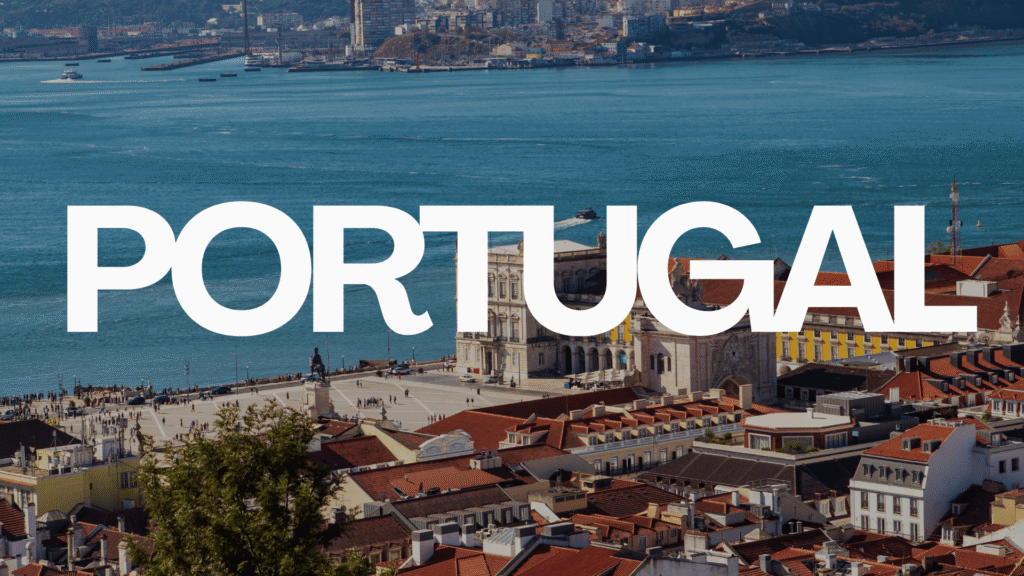
There is a version of European travel that Portugal has been quietly perfecting while its more famous neighbors absorbed the majority of the continent’s tourist attention. Paris has the Louvre and the lines that come with it. Rome has the Colosseum and the crowds that surround it. Lisbon has the light — the particular quality of Atlantic coastal light that falls differently on the city’s seven hills and the terracotta rooftops and the river that opens onto the ocean a few kilometers downstream — and a daily life that moves at a pace that rewards staying rather than passing through. Portugal’s emergence as Europe’s most compelling destination for long-term travelers is not an accident of marketing or a trend driven by social media visibility alone. It is the result of a combination of qualities that accumulate in significance the longer a traveler stays, and that combination has no precise equivalent anywhere else on the continent.
What Portugal Offers That Short Visits Cannot Fully Capture
The qualities that make Portugal compelling to long-term travelers are precisely the qualities that brief visits only partially access. Lisbon rewards extended time in ways that a three-day itinerary cannot capture — not because the obvious attractions require more time to visit but because the city’s character reveals itself through the accumulation of ordinary experience rather than through a checklist of monuments and museums. The neighborhood coffee shop where the same faces appear every morning, the miradouros that show different faces of the city depending on the hour and the season, the fado that sounds different heard through an open window than it does in a venue arranged for tourists — these are experiences that belong to the traveler who stays rather than the one who passes through.
Porto, two hours north by train, offers a version of this depth that is distinct enough from Lisbon’s to justify the journey as a separate destination rather than a day trip. Where Lisbon looks outward toward the Atlantic with a cosmopolitan confidence built from a history of exploration, Porto looks inward at a working city that has not softened its character for visitors in the way that more thoroughly touristified European cities have. The wine culture, the river, the baroque architecture covering entire building facades in azulejo tile, and the particular quality of interaction with a population that is genuinely hospitable without being servile — these are the textures that long-term travelers come for and that the city delivers consistently to those who give it enough time.
The Practical Advantages That Support Extended Stays
Beyond the experiential case, Portugal offers a set of practical advantages for long-term travelers that no amount of atmospheric appeal can substitute for and that have made it a destination of deliberate choice rather than simply a romantic one. The cost of living relative to Western European equivalents is meaningfully lower in ways that affect the daily budget of an extended stay in concrete and accumulating terms. Accommodation, food at every price point, local transportation, and the incidental expenses of daily life — coffee, wine, fresh produce from local markets — are priced at levels that allow a comfortable extended stay at a budget that the same duration in Paris, Amsterdam, or Copenhagen would not accommodate without significant compromise.
Portugal’s digital infrastructure has kept pace with the influx of remote workers and long-term travelers that its quality of life and cost structure have attracted. High-speed internet access is reliable in urban centers and increasingly available in smaller cities and towns that have positioned themselves as alternatives to Lisbon and Porto for travelers seeking the Portuguese experience with less of the tourist volume that the two major cities have absorbed. The country’s introduction of a dedicated digital nomad visa — formalizing the legal pathway for remote workers to reside in Portugal for extended periods — has addressed the regulatory dimension that long stays in many European destinations complicate, making Portugal one of the most straightforward European options for non-EU travelers intending to stay beyond the standard tourist entry period.
The Regional Diversity That Sustains Extended Engagement
One of the structural advantages Portugal holds for long-term travelers is the geographic and cultural diversity contained within a relatively compact country — a range that allows meaningful movement between genuinely distinct environments without the logistical complexity and expense that equivalent diversity would require in a larger country. The Alentejo — the agricultural interior south of Lisbon — offers a landscape of cork oak forests, medieval walled towns, and a food and wine culture that is entirely distinct from the coastal cities, at a pace that coastal urban life does not replicate. The Douro Valley, where port wine production has shaped the landscape into one of the most visually dramatic wine regions in Europe, is a two-hour drive from Porto and a world removed from it in character and tempo.
The Algarve coast in the south has absorbed the largest share of beach tourism and in peak season carries the crowds that tourism at scale inevitably produces, but its geography contains enough variety — from the dramatic rock formations and hidden coves of the western Algarve to the calmer, more accessible beaches of the eastern coast near the Spanish border — that travelers who approach it with flexibility rather than a fixed destination find experiences that the peak season reputation does not suggest are available. The islands of Madeira and the Azores extend Portugal’s geographic range into the Atlantic in ways that are logistically accessible from the mainland and offer environments — volcanic landscapes, endemic flora, and a quality of oceanic remoteness — that mainland Portugal cannot approximate.
Why the Window for Experiencing It Well Is Worth Taking Seriously
Portugal’s trajectory as a travel destination follows a pattern that travelers who have watched other European cities move through the discovery-to-saturation cycle will recognize. Lisbon has absorbed significant tourist volume over the past decade, and the neighborhoods most prominently featured in travel media have developed the characteristics — souvenir shops displacing local businesses, accommodation prices reflecting international demand rather than local cost of living, restaurant menus increasingly oriented toward tourist expectations — that tourist saturation produces everywhere it arrives. The city is not ruined by this — its size, its hills, and the depth of its residential neighborhoods beyond the tourist circuits mean that genuine Lisbon remains accessible to travelers willing to move beyond the obvious — but the gap between the Lisbon of a decade ago and the Lisbon of today is real and continuing to widen.
The practical implication is not urgency in the frenetic sense of rushing to a destination before it changes — it is the more considered recognition that traveling somewhere with genuine depth and intentionality, while that depth remains accessible without extraordinary effort, produces an experience qualitatively different from arriving after the transformation has completed. Portugal’s secondary cities — Braga, Coimbra, Évora, Setúbal — and its interior regions offer the conditions that Lisbon’s early discovery phase provided to the travelers who found it then, and the infrastructure to support comfortable extended stays exists in enough of these places to make them realistic alternatives rather than aspirational ones.
Conclusion
Portugal’s position as Europe’s most compelling destination for long-term travelers rests on a combination of qualities that reinforce each other in ways that no individual element fully explains. The light, the food, the cost structure, the regional diversity, the practical infrastructure for extended stays, and the particular character of Portuguese hospitality that feels genuine rather than performed — these accumulate into an experience that the traveler who stays discovers fully and the one who passes through only partially accesses. The destination rewards the investment of time that long-term travel represents with a return that brief visits cannot replicate, which is the definition of a place worth staying in — and Portugal delivers it with a consistency that its growing reputation has not yet outpaced.